
Key takeaways
- Compare the best winter hats for bitter commutes, ski days and outdoor work, from merino beanies and fleece-lined knits to trapper and windproof picks.
A winter hat has one job — keeping your head and ears comfortable when the temperature drops and the wind picks up — but the right design depends heavily on where you wear it. A thick knit that feels perfect on a calm evening walk can leak heat badly on an exposed ridge or a windy platform, while a full trapper hat that shrugs off deep cold will leave you overheating on a mild afternoon. Material, lining, ear coverage and fit all matter more than how chunky the knit looks.


This guide compares five winter hats that cover the main buying decisions: a pure merino beanie for natural warmth and odor resistance, a fleece-lined knit for soft comfort, a trapper hat for serious cold, a windproof membrane hat for exposed work and wet snow, and a simple acrylic watch cap that takes abuse and costs little. Each pick below lists its materials, lining, ear coverage and sizing, plus the honest limits worth knowing before you buy.
As an Amazon Associate, we earn from qualifying purchases.
Quick answer
For most people, the Minus33 Ridge Cuff Beanie is the best everyday winter hat: pure merino, warm when damp, easy to live with. Choose the FURTALK fleece-lined beanie for soft comfort, the Mysuntown trapper for deep cold, the TOP-EX DryKnit for wind and wet snow, and the Carhartt A18 when you want a tough, low-cost workhorse.
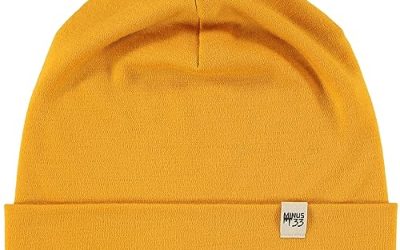
Minus33 Merino Wool Ridge Cuff Beanie (Black)
The Ridge Cuff Beanie is Minus33’s classic cuffed watch cap, knitted from 100 percent merino wool in a 230 gsm interlock knit using 18.5-micron fibers. It weighs about 2.4 ounces (68 grams), so it packs small, and the fold-over cuff puts a double layer of wool over your ears and forehead. There is no separate lining and no membrane; the warmth comes from the wool itself. Minus33 sells it in one size and describes the fit as covering head circumferences of roughly 17 to 25 inches, which spans most adults, although the knit sits closer on larger heads.
Merino is the reason to buy it. Wool keeps insulating when it picks up moisture from sweat or snow, manages odor better than synthetics across repeated wear, and feels soft against skin that finds ordinary wool scratchy, thanks to the fine fiber diameter. It suits commuters, walkers, campers and anyone who wants one hat to cover most of the season.
The limits are real. A plain knit, even a dense interlock, lets wind through, so on exposed ground this is not the warmest option here. Wool also dries slowly once soaked, and it asks for gentler washing than acrylic. If your winters are mostly windy rather than merely cold, look at the windproof pick below instead.
FURTALK Winter Fleece Lined Knit Beanie (Black)
The FURTALK fleece-lined beanie pairs a chunky acrylic knit shell with a full polyester fleece lining, in a relaxed slouchy cut that sits loose at the back. The lining is the point: it adds a soft, still layer against the skin, covers the ears when the hat is pulled down, and takes the scratch out of the knit. It comes in one size aimed at women, with a stretch knit that fits most head sizes, and the black version referenced here is the plain, pom-free style.
This is the comfort pick. It suits school runs, dog walks, spectating and everyday cold-weather wear where you want warmth without a technical look, and the fleece band feels kind to foreheads that react to bare acrylic or wool.
Know the trade-offs. The slouchy fit that looks relaxed can shift or slip during active use, and it is too bulky and warm to sit well under a ski helmet. Acrylic holds moisture rather than wicking it, so the lining can feel clammy during hard effort, and the one-size cut runs smaller than a typical men’s beanie, which matters for larger heads.
Mysuntown Unisex Winter Trooper Trapper Hat (Black)
The Mysuntown trooper hat is a classic ushanka-style trapper: a smooth polyester shell lined with faux fur, with deep ear flaps that fasten under the chin with a strap or button up on top of the crown when you want them out of the way. The listing includes a detachable windproof face mask, and the one size is aimed at head circumferences of about 22 to 24 inches.
Coverage is what sets it apart. The flaps wrap the ears, cheeks and back of the neck, and fastening them under the chin seals the gaps that a beanie leaves open. That is why trapper hats remain the default for stationary work in deep cold: ice fishing, snow clearing, winter site work, and long waits in wind.
The limits match the design. It is bulky, looks like expedition gear, and is far too warm for mild days or steady exercise, when the faux fur lining holds sweat instead of moving it. The shell sheds light snow but this is not a waterproof hat, and the included mask is a basic add-on rather than a substitute for a proper balaclava. If your cold is dry, still and severe, this is the warmest shape in the guide.
TOP-EX DryKnit Windproof Beanie with Brim and Ear Flaps (Black, XL/XXL)
The TOP-EX DryKnit hat is built like a three-layer system. The outer is a knit of 80 percent merino wool and 20 percent acrylic; the middle is a waterproof, windproof membrane; and the inside, including the ear flaps, is lined with polyester fleece. A short brim shades the eyes and sheds drips, and instead of one-size sizing it comes in two sizes, M/L and XL/XXL. The ASIN in the table below is the black XL/XXL version, made for larger heads.
That membrane changes what the hat can do. Wind that passes straight through a normal knit stops at the middle layer, and wet snow melts on the surface instead of soaking the insulation. This is the pick for exposed outdoor work, lift-served skiing in storm weather, and cold, wet climates where the other hats in this guide would eventually wet out.
The compromises are breathability and bulk. A membrane that blocks wind also slows vapor escape, so during hard uphill effort your head can overheat. The brim and ear flaps will not sit comfortably under every helmet or hood, and TOP-EX is a newer, smaller brand than the established names here, so its long-term track record is shorter. Treat it as the bad-weather specialist rather than the everyday default.
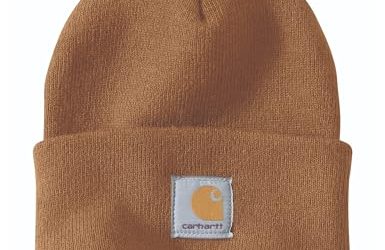
Carhartt Men’s Acrylic Watch Hat A18 (Black)

The A18 is the watch cap Carhartt has sold for decades: a 100 percent acrylic rib knit with a fold-up cuff and the square Carhartt label sewn on the front. It is unlined, comes in one size, and is sold in a long list of colors; the ASIN in the table is the black version. Pulled down with the cuff folded, it covers the ears fully; worn unfolded, it sits as a shorter cap.
Its appeal is simplicity and toughness. Acrylic rib knit stretches to fit most heads, shrugs off rough handling, washes easily, and dries faster than wool. It suits work sites, yard work, driving, and anyone who loses hats often enough to want a low-cost spare in the truck, the toolbox and the coat closet.
The limits are warmth physics. An unlined knit is a single layer with air gaps in the rib, so wind passes through and the A18 is the least protective hat here in serious weather. Acrylic also loses more of its insulating value when wet than wool does, and one size can feel tight on larger heads until the knit relaxes with wear. For calm, cold days it is plenty; for storms, choose one of the lined or membrane picks above.
How to choose
Begin with wind, not temperature. In exposed conditions, windproofing matters more than thickness: a thin hat with a membrane or a tight fleece ear band can feel warmer than a thick, loose knit, because moving air strips heat through open fibers. If your cold comes with wind, prioritize a membrane, a lined ear band, or the sealed flaps of a trapper hat.
Next, match material to moisture. Wool keeps insulating when it is damp and resists odor, which suits long days and repeated wear, but it dries slowly once soaked and needs gentler care. Acrylic and polyester dry faster and wash easily, yet they lose more warmth when wet and can feel clammy during effort. Fleece linings add comfort and block some wind at the skin, at the cost of extra bulk.
Then check sizing honestly. Most winter hats are one size, and one-size knits run small on larger heads: they ride up, leave the ears half covered, and squeeze enough to cause headaches. If your head circumference is above average, look for sized options like the TOP-EX above, or a stretch knit with a deep cuff you can unfold for coverage.
Finally, judge ear coverage before crown thickness. Ears have little insulation of their own and sit directly in the wind, so ear coverage decides real-world warmth more than crown insulation does. A cuff you can pull down, a lined ear band, or full flaps will do more for your comfort than an extra layer over the top of your head.
Who should skip
Skip this whole list if you wear a helmet for your winter hours. Ski, climbing and cycling helmets need a thin, close-fitting liner cap that sits flat under the shell; every hat here is too thick, too loose, or has cuffs, flaps or a brim that will break the fit. The same goes for runners and ski tourers working hard uphill, who will overheat in lined hats and should choose a light headband or liner instead. And if your face and neck are the problem rather than your crown, you need a balaclava, not a warmer hat: none of these five covers the face beyond the trapper’s basic mask.
Frequently Asked Questions
What is the warmest type of winter hat?
Shape beats thickness. A trapper hat with the flaps fastened, or a windproof hat with full ear coverage, keeps more heat than a thick beanie because it seals the ears and neck against moving air. In calm air the differences shrink, and a dense wool or fleece-lined knit is enough for most days.
Is merino wool better than acrylic for a winter hat?
For warmth when damp and for odor control across repeated wear, yes. Wool insulates even after it absorbs moisture and needs washing less often. Acrylic wins on easy care, faster drying and lower cost, which is why it suits work hats and spares. Neither blocks wind on its own.
How should a winter hat fit?
Snug without pressure points, low enough to cover the ears fully, and deep enough that it does not creep up when you look around. If a one-size hat rides up or gives you a headache within minutes, size up where sized options exist, or choose a deeper cuff you can unfold for coverage.
Can I wear one of these hats under a ski helmet?
Generally no. Helmets are fitted to your head, and a cuffed or lined hat underneath changes the fit and can leave gaps. Wear a thin helmet liner instead, and keep a warm hat like these for the lift lines, the parking lot and the walk back.
Final verdict
For most readers, the Minus33 Ridge Cuff Beanie is the winter hat to buy first: pure merino warmth, a cuff that doubles over the ears, and a weight you can forget in a coat pocket. Add the FURTALK when you want fleece softness for everyday wear, the Mysuntown trapper when your cold is severe and stationary, and the TOP-EX DryKnit when wind and wet snow are the real enemy. Keep the Carhartt A18 as the honest workhorse — inexpensive, tough, and good enough whenever the weather is merely cold.
Product and ASIN Reference
| Product | ASIN |
|---|---|
| Minus33 Merino Wool Ridge Cuff Beanie (Black) | B00B2A4R38 |
| FURTALK Winter Fleece Lined Knit Beanie (Black) | B07TXH848X |
| Mysuntown Unisex Winter Trooper Trapper Hat (Black) | B015E0E3AI |
| TOP-EX DryKnit Windproof Beanie with Brim and Ear Flaps (Black, XL/XXL) | B0G2MHX6WD |
| Carhartt Men’s Acrylic Watch Hat A18 (Black) | B002G9UDYG |
FAQ
What is the warmest type of winter hat?
Is merino wool better than acrylic for a winter hat?
How should a winter hat fit?
Can I wear one of these hats under a ski helmet?
More from Amazon
Programs that pair well with the guide above. Offers and eligibility are set by Amazon and may change.
Free shipping on eligible items, Prime Video and more. Eligible new members can start with a free trial.
Start a Prime free trialAudiobooks and podcasts to listen to on the go. Eligible new members can start with a free trial.
Try Audible freeAd-free music streaming. Eligible new subscribers can start with a free trial.
Try Music Unlimited freeA free business account with business pricing and bulk-buying tools for work, shop or home office.
Create a business accountAs an Amazon Associate we earn from qualifying purchases.


Write Your Review
No reviews yet. Be the first to share your experience!