
Key takeaways
- Compare the best drying wardrobe cabinets for winter coats: heated fabric wardrobes, a compact ventless cabinet and a steam closet with a snow cycle.
As an Amazon Associate we earn from qualifying purchases

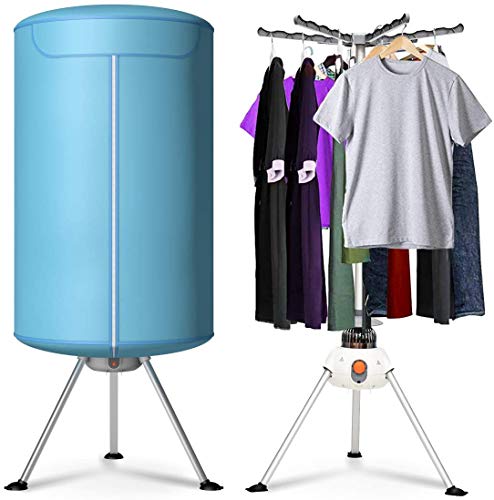
A winter coat does not dry like a t-shirt. A soaked parka carries water in its shell, its lining and deep inside its insulation, and draping it over a chair in a heated room can leave the inside damp for days — long enough for musty smells to set in and for down fill to clump and lose loft. The best drying wardrobe cabinets for winter coats solve this by enclosing hanging garments in a cabinet or covered wardrobe and circulating heated air around them, so heavy coats dry from the inside out without a tumble drum battering the fill or the waterproof coating.
This guide compares five enclosed heated drying cabinets sold on Amazon US, from a tall 67-inch fabric wardrobe with a 1,600W heater to a hard steam closet with a dedicated rain and snow drying cycle. The focus throughout is cold-weather gear: long parkas, insulated ski jackets, heavy wool coats and the hats and gloves that come in wet alongside them.
Quick Picks: Best Drying Wardrobe Cabinets for Winter Coats
| Product | Best for | Key spec |
|---|---|---|
| KASYDoFF Portable Clothes Dryer, 1600W 3-Tier (V3T) | Whole-family coat loads | 67 in tall, 35 lb capacity, 1,600W |
| LG Styler Steam Closet (S3MFBN) | Technical shells and premium hard-cabinet drying | Gentle Dry with Rain/Snow cycle, heat-pump drying |
| Kiseely Clothes Dryer Wardrobe, 60 Inch (GR360) | Tall mid-size wardrobe on casters | 60 in tall, rack rated to 18 kg |
| COSTWAY Portable Clothes Dryer, Ventless (23597-CYEP) | Compact entryway corner | 56 in tall, 900W, timer up to 180 minutes |
| MOJOCO Portable Clothes Dryer (MJC-T03) | One coat at a time, travel and RV use | 600W, up to 9 light garments |
How to Choose a Drying Cabinet for Heavy Winter Gear
Interior Height Comes First
A knee-length parka on a hanger needs roughly 50 to 55 inches of clear hanging drop, and a long expedition coat needs more. Cabinet height is the first spec to check: the cabinets below range from 56 to 67 inches tall. If the hem of a coat folds against the base of the cabinet, that folded section sits in pooled moist air and dries last, so buy more height than your longest coat strictly needs.
Heat Output and Airflow
Wattage is a rough guide to how fast a cabinet can push moisture out of thick insulation. A 1,600W heater moves a lot of warm air and suits back-to-back loads of heavy coats; a 600W unit is gentler and slower, better matched to one or two garments. Just as important is circulation: every pick here uses a fan or pump at the base to push heated air up through the hanging clothes rather than relying on still warm air.
Capacity Is About Bulk, Not Just Weight
Manufacturers rate these cabinets in pounds or kilograms, but winter gear runs out of room before it runs out of weight allowance. Three bulky parkas can fill a cabinet rated for 35 lb of laundry, because the shells need air gaps between them to dry evenly. Treat the weight rating as a ceiling for the frame, and plan on spacing heavy coats a few inches apart on the rail.
Gentle Heat for Technical Fabrics and Down
Hanging warm-air drying is one of the kindest ways to dry insulated and membrane garments: there is no drum to abrade face fabrics or crack coatings, and moderate cabinet temperatures are far below what damages down clusters or synthetic fill. Heat-pump cabinets run cooler still, which suits expensive shells. Whatever the cabinet, unzip pockets and open the coat fully so air reaches the lining, and let down items run until the fill feels evenly lofty rather than cool and dense in patches.
Timers, Safety Cut-Offs and Power Draw
Wet winter loads take longer than summer laundry — plan on multi-hour cycles for saturated insulation. A timer with automatic shut-off lets a cycle run in the evening without supervision, and overheat protection is worth having on any heated appliance that runs for hours. Note the power draw, too: a 1,600W cabinet pulls heavily on a household circuit, so give it its own outlet rather than sharing with other heaters or appliances.
Where It Will Live: Entryway and Mudroom Fit
Most of these cabinets earn their place by the door, where wet gear comes in. Fabric-wardrobe models fold down when the season ends, while a hard cabinet is a permanent piece of furniture. Measure the footprint as well as the height, and leave clearance around the base unit where the fan draws air in. None of these cabinets is a boot dryer, so in a boot-and-coat entryway they handle the hanging gear while boots dry separately beside them.
The Cabinets in Detail
KASYDoFF Portable Clothes Dryer, 1600W 3-Tier (V3T)
The KASYDoFF V3T is the biggest fabric drying wardrobe in this roundup: a 67-inch-tall frame with three tiers of hanging rails, a zip-up cloth cover and a 1,600W heater with a fan at the base. Amazon lists capacity at 35 pounds, and the seller describes that as roughly 25 to 40 items of ordinary laundry — in winter terms, think several coats hung with space between them, plus gloves and hats on the upper rails. A digital timer sets the run time and switches the heater off automatically. The frame is stainless steel pipe with plastic supports, and the whole cabinet folds down for storage between seasons.
- Strength: The tallest interior here, so long parkas hang straight without the hem pooling at the base.
- Strength: 1,600W of heat is the most drying power in this group, which matters for saturated insulation.
- Trade-off: That power draw is heavy for a shared circuit; it wants a dedicated outlet and no extension cord.
- Trade-off: The fabric cover and frame are functional rather than furniture-grade, and assembly takes some patience.
Skip it if your entryway has no spare outlet capacity, or if you only ever dry one light jacket at a time.
LG Styler Steam Closet (S3MFBN)
The LG Styler is the only true hard cabinet in this group — a mirrored steam closet that refreshes garments with TrueSteam and dries them with a heat-pump-based Gentle Dry program. That program is directly relevant to winter gear: alongside Normal and Time Dry settings, LG includes a Rain/Snow cycle under Gentle Dry and a Suits/Coats option under Special Care, which is exactly the wet-coat use case. Hangers move during the cycle to help shake out wrinkles, and the unit holds up to three items on its moving hangers plus trousers in the door crease-care press. Installation is plug-and-go with portable water fill and drain containers, so there is no plumbing or venting, and Wi-Fi control is built in.
- Strength: Low-temperature heat-pump drying is the gentlest option here for down, wool and waterproof membranes.
- Strength: A dedicated Rain/Snow dry cycle and steam refresh handle wet coats and the odors that come with them in one cabinet.
- Trade-off: Capacity is three hanging items — this is a per-outfit cabinet, not a family laundry solution.
- Trade-off: It is a permanent, full-size appliance that needs its own floor space and a water container filled and emptied.
Skip it if you need to dry the whole household’s coats after every outing, or if a fold-away cabinet suits your space better.
Kiseely Clothes Dryer Wardrobe, 60 Inch (GR360)
The Kiseely GR360 splits the difference between the two cabinets above: a 60-inch-tall drying wardrobe with strengthened metal poles, a flame-retardant cover and casters so it can roll between a utility room and an entryway. Kiseely rates the rack to hold up to 18 kg, and the listing highlights include a timer function on the heater unit so a cycle can be left to finish on its own. At roughly 27.6 inches wide and 17.7 inches deep, it takes a slimmer slice of floor than the KASYDoFF while still giving most coats a straight hang. The cover design also lets it double as ordinary wardrobe storage between drying sessions.
- Strength: 60 inches of hanging height covers most parkas, in a narrower footprint than the largest cabinets.
- Strength: Casters make it practical to move the cabinet to wherever the wet gear lands.
- Trade-off: The heater is a single base unit with a timer rather than a multi-program controller, so thick loads need manual time judgement.
- Trade-off: Like all fabric wardrobes, the cover and frame will not match a hard cabinet for rigidity.
Skip it if your longest coats need the full 67-inch drop of the KASYDoFF, or if you want programmed fabric-specific cycles.
COSTWAY Portable Clothes Dryer, Ventless (23597-CYEP)
COSTWAY’s ventless cabinet is the compact traditional design in this class: a 27.5 x 27.5 x 56-inch frame with a fabric cover bag, a hot-air pump at the base and a rated maximum load of 22 lb. The manufacturer’s specification lists 900W of rated power and a maximum drying time of 180 minutes on the timer, which suits a couple of coats or a coat plus smaller gear per run. There is no vent hose and no installation — it plugs into a standard 110–120V outlet — and the cover bag can serve as a small hanging wardrobe when the dryer is idle.
- Strength: The smallest full wardrobe here, sized for an entryway corner or a dorm room.
- Strength: A simple timer up to 180 minutes covers most single-coat drying sessions without supervision.
- Trade-off: At 56 inches tall, the longest parkas will brush or fold at the hem.
- Trade-off: 900W and a 22 lb ceiling mean heavy multi-coat loads go in batches.
Skip it if your household regularly brings home three or more soaked coats at once.
MOJOCO Portable Clothes Dryer (MJC-T03)
The MOJOCO is the minimalist end of the category: a 600W heater unit with an enclosed hanging bag that sets up without tools and folds away flat. Amazon lists a 22 lb capacity, and the maker positions it for up to nine light garments — in winter use, read that as one coat at a time, or a round of hats, gloves and base layers. An adjustable timer controls the cycle, and the low power draw makes it easy on shared circuits in apartments, dorms and RVs where a 1,600W cabinet would be a problem.
- Strength: The lowest power draw here, and it packs flat enough for a closet shelf or an RV locker.
- Strength: Quick, tool-free setup suits occasional use rather than a permanent drying station.
- Trade-off: It is built and marketed for light clothes; a thick saturated parka is a long, slow cycle at 600W.
- Trade-off: The hanging bag is far shorter than a wardrobe, so long coats do not hang at full length.
Skip it if drying long or heavily insulated coats is your main job — the taller wardrobes above are built for that.
Which One Fits Your Situation
A Family Entryway With Daily Wet Coats
Choose the KASYDoFF V3T. Its 67-inch interior and 35 lb rating handle several coats per cycle, and the digital timer lets an evening load finish unattended. Give it a dedicated outlet by the door and it becomes the household’s drying station for the season.
Ski and Snowboard Weekends
The Kiseely GR360 fits a cabin or condo routine well: parkas, ski pants and mid-layers hang in one tall wardrobe, and the casters let you roll it out for the weekend and back into a corner afterwards. For a single high-value shell and jacket rotation, the LG Styler’s Rain/Snow cycle is the more careful option.
Technical Shells and Down Jackets
Choose the LG Styler. Low-temperature heat-pump drying plus steam refresh treats waterproof membranes and down fill gently, and the Suits/Coats care cycle is aimed at exactly this kind of garment. Accept the three-item limit and dry outfits in rotation.
Small Apartment or Rental
The COSTWAY cabinet needs no venting, no installation and only a corner of floor, and it folds back into wardrobe duty between uses. If even that footprint is too much, the MOJOCO packs flat entirely — just expect one garment at a time.
One Coat at a Time in an RV or Dorm
Choose the MOJOCO MJC-T03. Its 600W draw is realistic on limited power supplies, setup takes minutes, and for a single commuter coat or a set of gloves and base layers it is all the cabinet you need.
Common Mistakes
- Overloading the rails. Crowded coats trap moist air between shells and double the drying time; leave air gaps even when the weight rating allows more.
- Ignoring cabinet height. A parka folded at the hem inside a short cabinet stays damp at the fold long after the rest feels dry.
- Zipping coats shut. A closed coat dries its shell while the lining stays wet; open zips and pockets so air circulates inside.
- Stopping down items too early. Fill that still feels cool and dense holds moisture; run the cycle until the insulation feels evenly warm and lofty.
- Sharing the circuit. A high-wattage cabinet on the same circuit as a space heater invites tripped breakers mid-cycle.
- Expecting boot drying. These cabinets dry hanging garments; boots need their own airflow and do not dry well sitting in the base of a wardrobe.
FAQ
Can a drying wardrobe cabinet really dry a soaked parka?
Yes, with time. A heated cabinet circulates warm air around and inside the hanging coat, which is far more effective than still room air. A saturated insulated parka can take several hours depending on the cabinet’s wattage and how much water the insulation holds, so use the timer and check the lining and fill, not just the shell, before calling it done.
Is cabinet drying safe for down and waterproof shells?
Hanging warm-air drying is one of the gentler methods for both. There is no drum abrasion, and cabinet temperatures are moderate; heat-pump cabinets such as the LG Styler run cooler still and include cycles intended for coats and wet-weather gear. Follow the garment maker’s care label where it restricts heat, and dry down until the clusters feel fully lofty again.
How many winter coats fit in one cycle?
Fewer than the weight rating suggests. A cabinet rated at 35 lb can physically hold many coats, but bulky shells need space between them for airflow. In practice, two to four heavy coats per cycle is a sensible load for the full-size wardrobes here, with hats and gloves filling the gaps.
Do these cabinets need a vent or drain?
No. Every pick in this guide is ventless: moisture leaves as warm humid air around the unit, and none requires a hose or plumbing. The LG Styler uses small fill and drain water containers for its steam functions. Run any of them in a room with reasonable ventilation so the humidity they release can escape.
What size cabinet does a long coat need?
Work from the coat, not the room. Measure your longest coat on its hanger from hook to hem, then choose a cabinet with a few inches more interior height than that measurement — which is why the 60- and 67-inch wardrobes in this guide suit parkas better than compact 56-inch models.
FAQ
Can a drying wardrobe cabinet really dry a soaked parka?
Is cabinet drying safe for down and waterproof shells?
How many winter coats fit in one cycle?
Do these cabinets need a vent or drain?
What size cabinet does a long coat need?
More from Amazon
Programs that pair well with the guide above. Offers and eligibility are set by Amazon and may change.
Free shipping on eligible items, Prime Video and more. Eligible new members can start with a free trial.
Start a Prime free trialAudiobooks and podcasts to listen to on the go. Eligible new members can start with a free trial.
Try Audible freeAd-free music streaming. Eligible new subscribers can start with a free trial.
Try Music Unlimited freeA free business account with business pricing and bulk-buying tools for work, shop or home office.
Create a business accountAs an Amazon Associate we earn from qualifying purchases.

Write Your Review
No reviews yet. Be the first to share your experience!