
Key takeaways
- Compare telescoping roof snow rakes by reach, blade width, rollers and pole build, and pick the right ground-level tool for your roof and snow this winter.
Buying a telescoping roof snow rake is really a decision about three things pulling against each other: enough reach to clear the slope from the ground, little enough weight to control the head at full extension, and a head design that will not tear up the shingles it is meant to protect. The longest pole is rarely the right answer, and neither is the widest blade.
This guide is for homeowners clearing single and two-story roofs, cabin owners dealing with deep seasonal snow, and anyone who has decided the ladder stays in the garage this winter. The four rakes below were chosen from the names and specifications on their Amazon product pages, then matched to the roof shapes and snow types those listed parts actually suit.
Quick Picks
As an Amazon Associate we earn from qualifying purchases.
| Product | Best for | Key spec from title |
|---|---|---|
| Garelick 89421 Aluminum Roof Rake | Pulling snow off asphalt shingles without scraping them | 21 ft reach, 24 x 7 in aluminum blade, shingle-saver rollers |
| Snow Joe RJ204M Telescoping Roof Rake | One telescoping pole for several roof heights | Twist-n-lock telescoping pole, 25 in poly blade, 21 ft reach |
| Garant GPRR24T Telescopic Roof Rake | Shorter roofs where a lighter, shorter rake is easier to control | Telescopic aluminum handle to 16.5 ft, 24 in poly blade |
| SFIHOME Telescopic Roof Rake with Wheels | Long edges where wheels help the head roll up the slope | Adjusts 4.8 to 20 ft, 26 in head, wheels, 5-section tubes |
Read the table as a geometry check before anything else. If two rakes look close, the deciding details are usually the head protection and the pole system: wheels or a poly blade for the roof surface, and sections or a telescoping lock for storage and control. Those two checks settle most shortlists before you look at anything else in this guide at all.
How to Choose
A note on how to read the listings behind this guide: the headline number is almost always the maximum reach, measured with every section fitted or the pole at full extension. The useful figures sit one line down, in the blade width, the head material and the weight. Two rakes with the same reach can feel completely different on a roof, because one carries a wide poly blade on a stiff oval handle and the other carries a heavier metal head on a round pole that flexes. Compare those secondary figures and the four picks separate themselves quickly.
Match the reach to the roof, not the headline
Start with geometry, not marketing length. Stand where you will actually work, look at the eave height, and add the slope distance from the edge to the ridge line you hope to clear. A rake that reaches 21 feet on paper may only clear the lower third of a steep two-story roof once your own height and the working angle are counted. For a single-story ranch, a 16 to 18 foot tool often clears most of the plane with far less flex. Buy the shortest reach that does your roof, because every extra foot of pole is weight your shoulders hold at an angle.
Choose the blade and head protection for your roof surface
The head decides what touches your roof. Poly and polypropylene blades are forgiving on asphalt shingles and will not gouge a metal roof edge, while aluminum blades hold an edge better in crusted snow but need rollers or wheels to keep them off the surface. If a listing shows built-in wheels, that is not decoration: the head rides on the wheels and the blade hovers, which is how a metal head can work on shingles. Check the blade width too, because a 26 inch head clears faster per pass but is harder to steer around vents, chimneys and skylight curbs.
Compare pole builds for flex, locks and storage
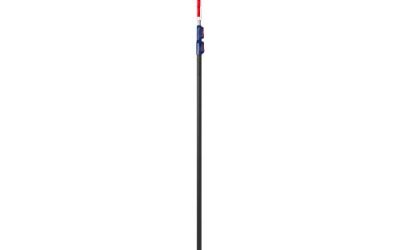
Three pole systems appear in these listings, and they behave differently at full length. Sectional poles snap together in fixed steps and store as a short bundle, but each joint is a place grit can collect. Telescoping poles adjust to any length and store as one piece, but the locking collar must hold under a loaded pull. Longer poles flex more, and flex steals control of the head. Think about where the tool will live from March to November as well, because a 21 foot one-piece pole needs a long wall, while sections fit on a shelf.
Work from the ground and respect the safety limits
The entire point of a roof rake is that nobody goes on the roof, so keep it that way. Never climb onto an icy or snow-covered roof to finish a patch the rake cannot reach, and never work from a ladder while pulling a loaded rake toward you. Before you start, look up: overhead power lines and the service drop to the house are hard to see against a grey sky, and a long aluminum pole must never come near them. Stand to the side of the eave, not under it, because the snow you release comes down in slabs, and clear the fall zone of people, pets and cars first.
The 4 Best Options
Garelick 89421 Aluminum Roof Rake

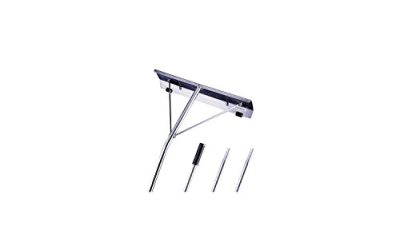
The Garelick is the classic sectional pull rake, built around an aluminum blade that never has to scrape the roof because small rollers hold it just above the shingles. Four pole sections snap together for a full 21 feet of reach, then come apart for storage on a garage wall. Aluminum keeps the whole tool light enough to guide from the ground without the head wandering. For a first roof rake purchase, that is the balance this model strikes best, and it is why it earns its place here.
Specs
- Reach: 21 feet from four snap-together pole sections
- Blade: 24 x 7 inch aluminum blade
- Rollers: built-in wheels keep the blade off the shingle surface
- Handle: lightweight aluminum sections
- Weight: about 5.75 pounds
- Model: 89421
Best for: Pulling snow off asphalt shingles without scraping them
Watch out for: Confirm the roller wheels are intact before the season, because a missing wheel lets the aluminum blade ride directly on the shingles.
ASIN: B0000BYCD5
Snow Joe RJ204M Telescoping Roof Rake

Snow Joe takes the opposite approach to sectional poles: one telescoping aluminum pole that twists to lock at the length you need. The oversized poly blade is 25 inches wide, so each pull moves a broad stripe of snow, and poly is forgiving when it meets a shingle edge or a vent boot. It also pulls leaves and loose debris outside the snow months. For a first roof rake purchase, those listed details add up to the most straightforward fit in this group.
Specs
- Reach: up to 21 feet with twist-n-lock telescoping pole
- Blade: oversized poly blade, 25 x 6 inches
- Handle: aluminum telescoping pole
- Use: snow, leaves and roof debris clearing
- Weight: about 4.8 pounds
- Model: RJ204M
Best for: One telescoping pole for several roof heights
Watch out for: Check that the twist-n-lock collar still grips firmly, since a pole that slips under load shortens your reach mid-pull.
ASIN: B00ZNUCGQI
Garant GPRR24T Telescopic Roof Rake

The Garant is the shortest and lightest rake in this group, and that is its point. Its telescopic aluminum handle stops at 16.5 feet, which keeps flex and shoulder strain down, while the 24 inch polyethylene blade clears a wide stripe per pass. The oval handle profile is a small detail that matters with gloves on, because the head stays oriented instead of twisting in your hands. For a first roof rake purchase, it is the combination of head design and handle that makes the difference, not any single figure.
Specs
- Handle: telescopic aluminum, extends to 16.5 feet
- Blade: 24 inch polyethylene blade
- Grip: oval handle shape with non-slip texture
- Blade note: lightweight poly blade that will not damage roof surfaces
- Weight: about 4.5 pounds
- Model: GPRR24T
Best for: Shorter roofs where a lighter, shorter rake is easier to control
Watch out for: Measure your eave height first, because the 16.5 foot handle is the shortest here and will not suit tall two-story edges.
ASIN: B00680IXB4
SFIHOME Telescopic Roof Rake with Wheels

SFIHOME builds its rake around a 26 inch head on five tube sections, so the working length adjusts from under 5 feet to a full 20 feet. Wheels on the head let it roll up the roof slope instead of digging in, which helps on shingle roofs where a bare blade edge can catch. The sectional build also means one damaged tube does not end the tool. For a first roof rake purchase, that is the balance this model strikes best, and it is why it earns its place here.
Specs
- Length: adjustable from 4.8 to 20 feet
- Sections: 5-section tube design
- Head size: 26 inches
- Frame: aluminum, with wheels on the head
- Use: snow and leaf removal from house roofs
- Model: SFA03-RSR00126ALMSL
Best for: Long edges where wheels help the head roll up the slope
Watch out for: Count the tube sections in the box on arrival and test the snap fits, since the reach depends on every section locking cleanly.
ASIN: B0DKF5R87F
Timing matters with roof snow. The practical moment to buy is before the snow season settles in, while you can still assemble the pole on a dry driveway, check every lock and wheel, and measure the eave without standing in a drift. During the season, the same logic applies storm by storm: an hour of raking fresh snow the morning after it falls replaces an afternoon spent fighting the same snow after it has crusted, refrozen and bonded to the layer below it.
Which One Fits Your Situation
A shingle roof you want to protect
Choose the Garelick 89421 Aluminum Roof Rake. Its rollers hold the aluminum blade just off the surface, so each pull removes snow without grinding granules off the shingles underneath. Its listed 21 ft reach, 24 x 7 in aluminum blade, shingle-saver rollers is the detail that matters most in this situation, and it keeps the whole job at ground level or on firm footing, where it belongs.
Several roof heights around one property
Choose the Snow Joe RJ204M Telescoping Roof Rake. One telescoping pole adjusts to the ranch wing, the garage and the main roof in turn, instead of forcing one fixed length onto every edge. Its listed twist-n-lock telescoping pole, 25 in poly blade, 21 ft reach is the detail that matters most in this situation, and it keeps the whole job at ground level or on firm footing, where it belongs.
A smaller home and a shorter operator
Choose the Garant GPRR24T Telescopic Roof Rake. The shorter, lighter build is easier to keep steady, and the oval grip keeps the blade facing the right way with gloves on. Its listed telescopic aluminum handle to 16.5 ft, 24 in poly blade is the detail that matters most in this situation, and it keeps the whole job at ground level or on firm footing, where it belongs.
Long, open edges with deep snow
Choose the SFIHOME Telescopic Roof Rake with Wheels. The wide wheeled head rolls up the slope and pulls a broad stripe per pass, which shortens sessions on long eaves. Its listed adjusts 4.8 to 20 ft, 26 in head, wheels, 5-section tubes is the detail that matters most in this situation, and it keeps the whole job at ground level or on firm footing, where it belongs.
Common Mistakes
- Buying the longest pole on the listing without measuring the eave, then fighting flex and shoulder strain all winter.
- Dragging a bare metal blade across asphalt shingles instead of choosing a poly blade or a head with working rollers.
- Waiting until snow has crusted and refrozen before raking, when the same job was easy the day it fell.
- Standing directly below the eave in the drop zone while pulling loaded snow toward the edge.
- Raising a long aluminum pole without checking for overhead power lines and the service drop to the house.
Frequently Asked Questions
How much of the roof should I clear with a rake?
Clear the lower few feet of the slope and the area above the eaves, working upward in stages rather than stripping the whole roof. That lower band is where meltwater refreezes into ice dams, so it matters most. Leave the upper snow in place unless your roof has a known load problem, and never try to chip at ice that has already formed.
When is the best time in the season to buy and rake?
Buy before the first real storm cycle, while you can still measure the eave, assemble the pole calmly and check the wheels and locks. During the season, rake after each significant snowfall rather than waiting for a deep, crusted pack, because fresh snow pulls or slides off with a fraction of the effort that refrozen layers demand later.
Can a roof rake damage shingles?
It can if the wrong head is dragged across them, which is why these listings use poly blades or wheels that hold a metal blade off the surface. Damage usually comes from forcing a stuck head, chopping at ice, or using a rake with a missing roller. Work in straight pulls down the slope, keep the head moving, and stop if the blade catches on a vent or flashing.
Will a roof rake remove an ice dam that is already there?
No, and trying is how roofs and gutters get damaged. A rake removes the snow that feeds the dam, which helps prevent it growing, but solid dam ice needs a different, gentler approach. Clear the snow above the dam so less meltwater reaches it, and if water is already backing up indoors, that is a job for a roofing professional rather than a longer pole.
Whichever rake you choose, the habit matters more than the hardware: clear the lower slope after each real snowfall, from the ground, in stages, and the ice dam problem that sends people onto ladders rarely gets started. Match the reach to the roof, protect the surface with the right head, and the tool will feel less like emergency equipment and more like part of the house.
FAQ
How much of the roof should I clear with a rake?
When is the best time in the season to buy and rake?
Can a roof rake damage shingles?
Will a roof rake remove an ice dam that is already there?
More from Amazon
Programs that pair well with the guide above. Offers and eligibility are set by Amazon and may change.
Free shipping on eligible items, Prime Video and more. Eligible new members can start with a free trial.
Start a Prime free trialAudiobooks and podcasts to listen to on the go. Eligible new members can start with a free trial.
Try Audible freeAd-free music streaming. Eligible new subscribers can start with a free trial.
Try Music Unlimited freeA free business account with business pricing and bulk-buying tools for work, shop or home office.
Create a business accountAs an Amazon Associate we earn from qualifying purchases.

Write Your Review
No reviews yet. Be the first to share your experience!