
Key takeaways
- Choose a telescoping roof snow rake for season-long maintenance, with durable poles, replaceable-feeling builds and heads that protect shingles pass after pass.
Seasonal roof maintenance rewards a different kind of rake than a one-off storm purchase. The tool will be assembled in the cold dozens of times, dragged across the same shingle tracks all winter, and stored for eight months without attention. So the decision is about joints that keep locking, wheels that keep rolling, and a blade that survives storage, as much as it is about reach.
This guide is for homeowners in snow-belt regions, landlords maintaining rental roofs from the ground, and cabin owners who clear after every visit. The four models were selected from their Amazon listing specifications, favouring sectional builds, protective heads and pole systems that can be checked and maintained between storms. Durability claims were ignored unless the listed build explained them.
Quick Picks
As an Amazon Associate we earn from qualifying purchases.
| Product | Best for | Key spec from title |
|---|---|---|
| Garelick 89421 Aluminum Roof Rake | Pulling snow off asphalt shingles without scraping them | 21 ft reach, 24 x 7 in aluminum blade, shingle-saver rollers |
| Garant GPRR24T Telescopic Roof Rake | Shorter roofs where a lighter, shorter rake is easier to control | Telescopic aluminum handle to 16.5 ft, 24 in poly blade |
| Gardenised Snow Rake Shovel for Roof Cleaning | Crusted snow where extra head weight keeps the blade planted | 21 ft twist-n-lock aluminum handle, 25 in blade |
| SFIHOME Telescopic Roof Rake with Wheels | Long edges where wheels help the head roll up the slope | Adjusts 4.8 to 20 ft, 26 in head, wheels, 5-section tubes |
Read the table as a geometry check before anything else. If two rakes look close, the deciding details are usually the head protection and the pole system: wheels or a poly blade for the roof surface, and sections or a telescoping lock for storage and control. Those two checks settle most shortlists before you look at anything else in this guide at all.
How to Choose
A note on how to read the listings behind this guide: the headline number is almost always the maximum reach, measured with every section fitted or the pole at full extension. The useful figures sit one line down, in the blade width, the head material and the weight. Two rakes with the same reach can feel completely different on a roof, because one carries a wide poly blade on a stiff oval handle and the other carries a heavier metal head on a round pole that flexes. Compare those secondary figures and the four picks separate themselves quickly.
Match the reach to the roof, not the headline
Start with geometry, not marketing length. Stand where you will actually work, look at the eave height, and add the slope distance from the edge to the ridge line you hope to clear. A rake that reaches 21 feet on paper may only clear the lower third of a steep two-story roof once your own height and the working angle are counted. For a single-story ranch, a 16 to 18 foot tool often clears most of the plane with far less flex. Buy the shortest reach that does your roof, because every extra foot of pole is weight your shoulders hold at an angle.
Choose the blade and head protection for your roof surface
The head decides what touches your roof. Poly and polypropylene blades are forgiving on asphalt shingles and will not gouge a metal roof edge, while aluminum blades hold an edge better in crusted snow but need rollers or wheels to keep them off the surface. If a listing shows built-in wheels, that is not decoration: the head rides on the wheels and the blade hovers, which is how a metal head can work on shingles. Check the blade width too, because a 26 inch head clears faster per pass but is harder to steer around vents, chimneys and skylight curbs.
Compare pole builds for flex, locks and storage
Three pole systems appear in these listings, and they behave differently at full length. Sectional poles snap together in fixed steps and store as a short bundle, but each joint is a place grit can collect. Telescoping poles adjust to any length and store as one piece, but the locking collar must hold under a loaded pull. Longer poles flex more, and flex steals control of the head. Think about where the tool will live from March to November as well, because a 21 foot one-piece pole needs a long wall, while sections fit on a shelf.
Work from the ground and respect the safety limits
The entire point of a roof rake is that nobody goes on the roof, so keep it that way. Never climb onto an icy or snow-covered roof to finish a patch the rake cannot reach, and never work from a ladder while pulling a loaded rake toward you. Before you start, look up: overhead power lines and the service drop to the house are hard to see against a grey sky, and a long aluminum pole must never come near them. Stand to the side of the eave, not under it, because the snow you release comes down in slabs, and clear the fall zone of people, pets and cars first.
The 4 Best Options
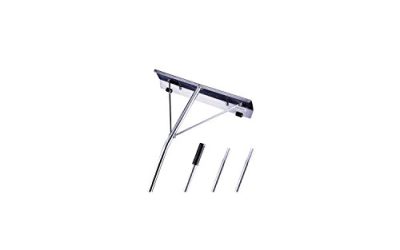
Garelick 89421 Aluminum Roof Rake

The Garelick is the classic sectional pull rake, built around an aluminum blade that never has to scrape the roof because small rollers hold it just above the shingles. Four pole sections snap together for a full 21 feet of reach, then come apart for storage on a garage wall. Aluminum keeps the whole tool light enough to guide from the ground without the head wandering. For a full season of repeated roof clearing, it is the combination of head design and handle that makes the difference, not any single figure.
Specs
- Reach: 21 feet from four snap-together pole sections
- Blade: 24 x 7 inch aluminum blade
- Rollers: built-in wheels keep the blade off the shingle surface
- Handle: lightweight aluminum sections
- Weight: about 5.75 pounds
- Model: 89421
Best for: Pulling snow off asphalt shingles without scraping them
Watch out for: Confirm the roller wheels are intact before the season, because a missing wheel lets the aluminum blade ride directly on the shingles.
ASIN: B0000BYCD5
Garant GPRR24T Telescopic Roof Rake

The Garant is the shortest and lightest rake in this group, and that is its point. Its telescopic aluminum handle stops at 16.5 feet, which keeps flex and shoulder strain down, while the 24 inch polyethylene blade clears a wide stripe per pass. The oval handle profile is a small detail that matters with gloves on, because the head stays oriented instead of twisting in your hands. For a full season of repeated roof clearing, that is the balance this model strikes best, and it is why it earns its place here.
Specs
- Handle: telescopic aluminum, extends to 16.5 feet
- Blade: 24 inch polyethylene blade
- Grip: oval handle shape with non-slip texture
- Blade note: lightweight poly blade that will not damage roof surfaces
- Weight: about 4.5 pounds
- Model: GPRR24T
Best for: Shorter roofs where a lighter, shorter rake is easier to control
Watch out for: Measure your eave height first, because the 16.5 foot handle is the shortest here and will not suit tall two-story edges.
ASIN: B00680IXB4
Gardenised Snow Rake Shovel for Roof Cleaning

The Gardenised rake is a long twist-n-lock design that runs from 7 feet collapsed to 21 feet fully extended, with a 25 inch blade at the end. At a little over six pounds it is the heaviest pull rake here, and that extra heft helps the blade stay planted on the roof instead of skating over crusted snow. The single telescoping pole also stores as one piece. For a full season of repeated roof clearing, those listed details add up to the most straightforward fit in this group.
Specs
- Handle: 21 feet, twist-n-lock extendable aluminum
- Blade width: 25 inches
- Minimum extension: 7 feet
- Weight: 6.19 pounds
- Dimensions: 25 x 5 x 252 inches at full extension
- Model: QI003671
Best for: Crusted snow where extra head weight keeps the blade planted
Watch out for: Plan storage for a long single pole, and expect more shoulder effort than the sectional models at full extension.
ASIN: B082XFYYC5
SFIHOME Telescopic Roof Rake with Wheels

SFIHOME builds its rake around a 26 inch head on five tube sections, so the working length adjusts from under 5 feet to a full 20 feet. Wheels on the head let it roll up the roof slope instead of digging in, which helps on shingle roofs where a bare blade edge can catch. The sectional build also means one damaged tube does not end the tool. For a full season of repeated roof clearing, it is the combination of head design and handle that makes the difference, not any single figure.
Specs
- Length: adjustable from 4.8 to 20 feet
- Sections: 5-section tube design
- Head size: 26 inches
- Frame: aluminum, with wheels on the head
- Use: snow and leaf removal from house roofs
- Model: SFA03-RSR00126ALMSL
Best for: Long edges where wheels help the head roll up the slope
Watch out for: Count the tube sections in the box on arrival and test the snap fits, since the reach depends on every section locking cleanly.
ASIN: B0DKF5R87F
Timing matters with roof snow. The practical moment to buy is before the snow season settles in, while you can still assemble the pole on a dry driveway, check every lock and wheel, and measure the eave without standing in a drift. During the season, the same logic applies storm by storm: an hour of raking fresh snow the morning after it falls replaces an afternoon spent fighting the same snow after it has crusted, refrozen and bonded to the layer below it.
Which One Fits Your Situation
A roof you clear after every single storm
Choose the Garelick 89421 Aluminum Roof Rake. The sectional aluminum build comes apart for a quick rinse and inspection, and the rollers are easy to check before the next snowfall. Its listed 21 ft reach, 24 x 7 in aluminum blade, shingle-saver rollers is the detail that matters most in this situation, and it keeps the whole job at ground level or on firm footing, where it belongs.
A rental property maintained on visits
Choose the Garant GPRR24T Telescopic Roof Rake. The light telescopic build travels easily, sets up in minutes and stores short, which suits a tool that lives in a car trunk between visits. Its listed telescopic aluminum handle to 16.5 ft, 24 in poly blade is the detail that matters most in this situation, and it keeps the whole job at ground level or on firm footing, where it belongs.
A cabin roof with deep, settled snowpack
Choose the Gardenised Snow Rake Shovel for Roof Cleaning. The heavier head and long pole handle settled snow that lighter rakes bounce over, and the single pole has no sections to lose in deep snow. Its listed 21 ft twist-n-lock aluminum handle, 25 in blade is the detail that matters most in this situation, and it keeps the whole job at ground level or on firm footing, where it belongs.
A long season on a wide, open roof
Choose the SFIHOME Telescopic Roof Rake with Wheels. Five sections let you replace the working length as the season changes, and the wheeled head keeps its pace up over long eaves. Its listed adjusts 4.8 to 20 ft, 26 in head, wheels, 5-section tubes is the detail that matters most in this situation, and it keeps the whole job at ground level or on firm footing, where it belongs.
Common Mistakes
- Waiting until snow has crusted and refrozen before raking, when the same job was easy the day it fell.
- Standing directly below the eave in the drop zone while pulling loaded snow toward the edge.
- Raising a long aluminum pole without checking for overhead power lines and the service drop to the house.
- Trying to chip a formed ice dam off with the rake head, which damages shingles, flashing and gutters.
- Buying the longest pole on the listing without measuring the eave, then fighting flex and shoulder strain all winter.
Frequently Asked Questions
Can a roof rake damage shingles?
It can if the wrong head is dragged across them, which is why these listings use poly blades or wheels that hold a metal blade off the surface. Damage usually comes from forcing a stuck head, chopping at ice, or using a rake with a missing roller. Work in straight pulls down the slope, keep the head moving, and stop if the blade catches on a vent or flashing.
Will a roof rake remove an ice dam that is already there?
No, and trying is how roofs and gutters get damaged. A rake removes the snow that feeds the dam, which helps prevent it growing, but solid dam ice needs a different, gentler approach. Clear the snow above the dam so less meltwater reaches it, and if water is already backing up indoors, that is a job for a roofing professional rather than a longer pole.
How do I store a long roof rake between seasons?
Rinse grit off the head and wheels, dry the pole sections, and store them where the blade edge will not be bent by heavier tools. Sectional models break down onto a shelf; telescoping models should be collapsed with the lock released so the collar is not stored under tension. A quick check of wheels, locks and blade in autumn means the tool is ready before the first storm.
Do I need the longest reach I can buy?
Usually not. Extra length adds flex, weight at the head and storage problems, and it only helps if your roof geometry actually uses it. Measure the eave height, add the slope you realistically clear from one standing position, and buy the shortest tool that covers it. Most single-story homes are served well by the shorter models in this guide.
Whichever rake you choose, the habit matters more than the hardware: clear the lower slope after each real snowfall, from the ground, in stages, and the ice dam problem that sends people onto ladders rarely gets started. Match the reach to the roof, protect the surface with the right head, and the tool will feel less like emergency equipment and more like part of the house.
FAQ
Can a roof rake damage shingles?
Will a roof rake remove an ice dam that is already there?
How do I store a long roof rake between seasons?
Do I need the longest reach I can buy?
More from Amazon
Programs that pair well with the guide above. Offers and eligibility are set by Amazon and may change.
Free shipping on eligible items, Prime Video and more. Eligible new members can start with a free trial.
Start a Prime free trialAudiobooks and podcasts to listen to on the go. Eligible new members can start with a free trial.
Try Audible freeAd-free music streaming. Eligible new subscribers can start with a free trial.
Try Music Unlimited freeA free business account with business pricing and bulk-buying tools for work, shop or home office.
Create a business accountAs an Amazon Associate we earn from qualifying purchases.


Write Your Review
No reviews yet. Be the first to share your experience!