
Our Short List of 3

- Best for: A generator-to-inlet run that has to work on the coldest night of the year.
- Length: 25 feet
- Connectors: NEMA L14-30P to L14-30R, twist lock, 4 prong
- Rating: 30 amp, 125/250 volt, up to 7,500 watts
- Wire: 10 gauge copper, STW jacket

- Best for: Households that store one dedicated storm cord and want it ready to grab.
- Length: 25 feet
- Connectors: NEMA L14-30P to L14-30R, 4 prong
- Rating: 30 amp, 125/250 volt, up to 7,500 watts
- Wire: 10 gauge, SJTW jacket
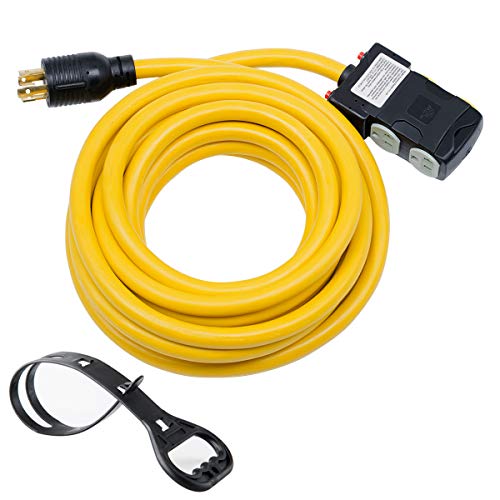
- Best for: Running separate winter essentials directly, without a transfer switch.
- Length: 25 feet
- Connectors: NEMA L14-30P to four 5-20R outlets
- Rating: 30 amp, 7,500 watts
- Wire: 10 gauge, 4 conductors
All 3 Picks at a Glance
| Product | Specs | Action |
|---|---|---|
| Vockjour 25FT 30 Amp Generator Cord |
| Check price on Amazon |
| RVGUARD 25 Foot Generator Extension Cord |
| Check price on Amazon |
| Yodotek 25Ft Generator Cord with Breaker |
| Check price on Amazon |
Key takeaways
- Generator cords that stay flexible in the cold and keep winter emergency gear powered: 30 amp locking picks, gauge and length checks, and CO safety notes.
A winter outage turns a generator cord into a decision about heat and water, not just reach. The wrong cord leaves a furnace blower, a sump pump, or a refrigerator sitting dark because the plug pattern is wrong, the jacket has gone stiff as a garden hose in the cold, or the run is too long for the load at the end of it. What matters most is whether the cord still coils, locks, and carries its full rating on the coldest night of the year.
This shortlist is for homeowners who park a portable generator outside during snow and ice, cabin owners who reopen a cold building mid-storm, and anyone running lights, refrigeration, and a pump from one machine. Every pick below was chosen from its Amazon product title and listing details — gauge, plug codes, jacket type, and stated temperature range — rather than from brand reputation.
Quick Picks
As an Amazon Associate we earn from qualifying purchases at no extra cost to you.
| Product | Best for | Key spec from title |
|---|---|---|
| Vockjour 25FT 30 Amp Generator Cord | Whole-house inlet runs in deep cold | 10 gauge STW, L14-30P to L14-30R, rated to -40 degrees C |
| RVGUARD 25 Foot Generator Extension Cord | A tidy, stored-ready backup kit | 10 gauge SJTW, L14-30 twist lock, cord organizer included |
| Yodotek 25Ft Generator Cord with Breaker | Feeding separate appliances directly | L14-30P to four 5-20R outlets, built-in breaker, 10 gauge |
| PlugSaf 25FT 30 Amp Generator Extension Cord | A second locking cord for another building | 10 gauge STW, L14-30P to L14-30R, 125/250V twist lock |
How to Choose
Start with the plug code, not the length
Winter emergencies punish guesswork, because the cord that almost fits is the cord that does not fit at all. Read the generator outlet first: most mid-size portables offer a four-prong L14-30 locking receptacle for 125/250 volt service, while smaller inverters may only give you household-style 5-20 outlets. Match both ends exactly — L14-30P into the generator, L14-30R toward a transfer switch inlet, or a fan-out end with 5-20R sockets if appliances plug in directly. Photograph the outlet panel before ordering, and compare the prong layout pin by pin.
Pick a jacket that still bends below freezing
A cord that coils easily in a warm garage can turn rigid on a January night, and a stiff cord gets dragged, kinked, and left half-unrolled across a snowy path. Look for the temperature range printed in the listing: the Vockjour cord below states a range down to -40 degrees C, which is the kind of figure that matters for unheated sheds. Jacket codes help too. STW and SJTW both describe outdoor-rated, weather-resistant constructions, but the stated low-temperature performance is the better guide for winter specifically.
Size the gauge to the load at the far end
For a 30 amp generator circuit, 10 gauge copper is the working standard in this class, and all four cords here use it. That thickness keeps voltage steadier when a refrigerator compressor or pump motor starts at the far end of a 25 foot run. Thinner household cords belong on single small loads, never between a generator and a house inlet. Add up the running loads you truly need — blower, fridge, a few lights, phone charging — and keep the total comfortably inside the cord and generator ratings.
Decide how the power gets indoors
There are two honest ways to use these cords. A locking L14-30 cord can feed a professionally installed transfer switch or inlet box, which is the tidy route for furnace blowers and hardwired circuits. Or a fan-out cord can end in household outlets so individual appliances plug in directly, one at a time, with cords run through a cracked window or door that still seals against weather. Choose the cord that matches the route you actually have; an inlet cord is useless in a home with no inlet.
Safety Notes
Run the generator outdoors only, well away from windows, doors, and vents, with the exhaust pointed away from the house — carbon monoxide is odorless, and a garage with the door open is still an indoor space. Never chain two cords together to gain length; buy the single length you need. Keep every connection dry and off the snow: raise plugs onto a board or bucket, and never let a connection sit in meltwater. Feed a house only through a transfer switch or inlet installed for that purpose, never through a dryer outlet or a cord with two male ends.
The 4 Best Options
Vockjour 25FT 30 Amp Generator Cord
- Best for: A generator-to-inlet run that has to work on the coldest night of the year.
- Length: 25 feet
- Connectors: NEMA L14-30P to L14-30R, twist lock, 4 prong
- Rating: 30 amp, 125/250 volt, up to 7,500 watts
- Wire: 10 gauge copper, STW jacket
A generator-to-inlet run that has to work on the coldest night of the year.
The listing describes the jacket as waterproof, but the plug bodies still need to stay dry and raised off wet ground.
Cold is the headline here. This 25 foot cord pairs a 10 gauge copper core with an STW jacket the listing rates from -40 degrees C up to 105 degrees C, so it is the pick for generators that live in unheated sheds and come out only when the weather turns. The twist-lock ends resist the slow pull of a heavy cable settling into snow, and the yellow jacket stays visible against a white yard when you check connections with a flashlight at midnight.
RVGUARD 25 Foot Generator Extension Cord
- Best for: Households that store one dedicated storm cord and want it ready to grab.
- Length: 25 feet
- Connectors: NEMA L14-30P to L14-30R, 4 prong
- Rating: 30 amp, 125/250 volt, up to 7,500 watts
- Wire: 10 gauge, SJTW jacket
Households that store one dedicated storm cord and want it ready to grab.
Confirm your inlet is L14-30; RV owners with TT-30 inlets need the different RVGUARD variant instead.
RVGUARD builds the same basic recipe — 25 feet, 10 gauge, L14-30 locking ends — and adds the detail winter users quietly appreciate: a cord organizer for storage. A backup cord that lives coiled and hung in the garage gets found in the dark; one tangled under paint cans does not. The SJTW jacket suits outdoor runs across a patio or driveway, and the four-prong configuration feeds a transfer switch inlet or a compatible RV inlet without adapters.
Yodotek 25Ft Generator Cord with Breaker
- Best for: Running separate winter essentials directly, without a transfer switch.
- Length: 25 feet
- Connectors: NEMA L14-30P to four 5-20R outlets
- Rating: 30 amp, 7,500 watts
- Wire: 10 gauge, 4 conductors
Running separate winter essentials directly, without a transfer switch.
The four outlets share one 30 amp feed, so a space heater plus a pump plus a fridge can trip the breaker; stagger the big loads.
Instead of ending in a single locking socket, this cord fans out into four household-style 5-20R outlets, which changes what a winter outage looks like: the refrigerator, a lamp, a phone charger, and a small pump can each plug in directly, with no inlet or transfer switch involved. A built-in breaker at the outlet end adds a layer of protection when several loads share the run. It suits apartments, cabins, and any home where wiring work is not an option.
PlugSaf 25FT 30 Amp Generator Extension Cord
PlugSaf offers the straightforward locking-to-locking pattern in a yellow 10 gauge STW cable, sold in several lengths, which makes it a sensible second cord: one for the house inlet, one kept at a barn, workshop, or a relative’s place across town. The molded twist-lock ends are the type that stay seated when a cable shifts under snow load, and the bright jacket is easy to trace from generator to wall when everything outside is white.
Specs
- Length: 25 feet (other lengths listed)
- Connectors: NEMA L14-30P to L14-30R, twist lock
- Rating: 30 amp, 125/250 volt, 7,500 watts
- Wire: 10 gauge, STW jacket
- Model number: KR6462
- Color: Yellow
Best for: A spare or second-location locking cord in the standard 30 amp pattern.
Watch out for: The listing’s comparison table mixes several PlugSaf models; confirm the L14-30P to L14-30R variant, not the 14-50R version, before ordering.
ASIN: B0C23XW6KR
Which One Fits Your Situation
Your house has a transfer switch or inlet box
Choose the Vockjour for the main run, especially if the generator sits far from the inlet or the cord is stored somewhere unheated. Its stated cold rating is the strongest winter credential in this group. The PlugSaf works as the backup length, kept coiled near the panel so a damaged or buried cord never leaves the house dark.
You have no inlet and plug appliances in directly
Take the Yodotek. Four household outlets at the far end cover the classic winter set — refrigerator, a light or two, device charging, and one rotating slot for a pump or a kettle used briefly on its own. Respect the shared breaker: run the biggest load alone, then swap.
The generator serves a cabin or outbuilding
The RVGUARD suits a place you reopen in bad weather, because the organizer keeps the cord hung, untangled, and quick to deploy with gloves on. Pair it with a written startup list taped inside the door — cord first, generator second, loads last — and the whole drill stays calm.
A storm is forecast and nothing is set up yet
Buy for the plugs you can see today, not the setup you plan someday. If the generator shows an L14-30 outlet and the house has no inlet, the Yodotek gets you powered tonight; if an inlet exists, the Vockjour is the safer long-term run. Either way, test-fit the full chain before the snow arrives.
Common Mistakes
- Buying a cord by length alone and discovering the plug pattern does not match the generator or the inlet.
- Running a generator in a garage or under a carport to keep it dry, which lets carbon monoxide reach the house.
- Chaining a second household extension cord onto a generator cord to reach one more room.
- Letting plug connections lie in snow or meltwater instead of raising and sheltering them.
- Plugging a space heater, pump, and refrigerator into one fan-out cord at the same time and tripping its breaker repeatedly.
Frequently Asked Questions
Can I run a space heater from a generator cord in winter?
A heater is one of the heaviest continuous loads you can add, and it should usually run alone on its circuit rather than sharing a fan-out cord with a refrigerator or pump. Better still, feed the furnace blower through a transfer switch so the house heating system does the work. Never use a heater to justify bringing the generator closer to the house.
How far from the house should the generator sit?
Place it outdoors, well away from windows, doors, and vents, with exhaust blowing away from the building — guidance on generator packaging commonly uses at least 20 feet as the working distance. That distance is exactly why a 25 foot cord is the practical minimum for most homes: it has to span the safety gap and still reach the inlet without tension.
Does a thicker jacket matter, or just the gauge?
Both matter, for different reasons. Gauge decides how much current the cord carries safely and how much voltage reaches the far end. The jacket decides whether the cord survives the season — whether it stays flexible in deep cold, resists abrasion dragged across ice and gravel, and keeps moisture out of the cable itself. For winter duty, check the stated low-temperature rating, not just the jacket code.
What should I check after the first storm use?
Inspect the full length before coiling it away: look for cuts from shovels and ice, crushed spots where a car crossed it, and any plug that feels warm or shows discoloration after running. Dry the cord completely, coil it loosely, and store it hung rather than under heavy boxes. A cord that passed one storm in good shape is your most reliable piece of equipment for the next one.
FAQ
Can I run a space heater from a generator cord in winter?
How far from the house should the generator sit?
Does a thicker jacket matter, or just the gauge?
What should I check after the first storm use?
More from Amazon
Programs that pair well with the guide above. Offers and eligibility are set by Amazon and may change.
Free shipping on eligible items, Prime Video and more. Eligible new members can start with a free trial.
Start a Prime free trialAudiobooks and podcasts to listen to on the go. Eligible new members can start with a free trial.
Try Audible freeAd-free music streaming. Eligible new subscribers can start with a free trial.
Try Music Unlimited freeA free business account with business pricing and bulk-buying tools for work, shop or home office.
Create a business accountAs an Amazon Associate we earn from qualifying purchases.

Write Your Review
No reviews yet. Be the first to share your experience!