
Key takeaways
- Compare the best hand cultivators for loosening soil in beds and borders, from cast aluminum and stainless steel picks to a classic wood-handle tool.
A hand cultivator is the small claw-shaped tool that does the quiet work of a garden bed: breaking up a crusted soil surface, aerating the top few inches around established plants, mixing in compost or granular feed, and flicking out small weeds before they settle in. Unlike a hand weeder, which uses a single blade or forked tip to lever out roots, a cultivator works with a fan of three tines, so each pull covers more ground and leaves the soil loose rather than dug.
The five tools below cover the main ways manufacturers build that claw. There is a cast aluminum model built for light weight, two stainless steel models aimed at heavier or wetter soil, a tempered steel tool with a traditional wood handle, and a double-sided design that pairs a cultivator with a tiller face. All five are handheld tools for kneeling work in beds, borders, planters, and raised beds, and the differences that matter are head material, tine shape, and handle design.
As an Amazon Associate, we earn from qualifying purchases.
Quick answer
For most gardeners, the Fiskars Ergo Cultivator is the straightforward pick: its cast aluminum head is light, rust resistant, and shaped for everyday loosening and weeding in beds. Gardeners working clay or stony soil should look at the Garden Guru stainless steel rake, while the Fiskars Xact suits anyone who wants deeper curved tines and a longer, weighted handle for leverage. The AMES 2446300 is the wood-handle classic, and the Garden Weasel 91367 adds a second tiller face for gardeners who want one tool to do two jobs.
Fiskars Ergo Cultivator

The Fiskars Ergo Cultivator is the lightweight benchmark in this category. Its head and tines are cast aluminum, a material that keeps the tool light in the hand and shrugs off rust, and the listing describes polished tines that stay sharp through heavy use. The handle follows the Ergo shaping Fiskars uses across its hand tool line, with a hang hole at the end for storage on a hook or peg.
Because the head is a single cast piece, there is no joint between head and handle to work loose over time. The trade-off is the material itself: cast aluminum is well suited to loosening, aerating, and weeding in worked beds, but it is not the head to choose for prying against buried stones or levering in compacted, stony ground, where a steel tool is the safer match. For routine bed maintenance, though, the low weight makes it an easy tool to use for long stretches of kneeling work.
Specs
- Head material: cast aluminum
- Tines: three, polished
- Handle: ergonomic grip with hang hole
- Model: 384240-1007
- Weight: not stated
- Warranty: lifetime warranty
Who it’s for: Gardeners who want a light, rust resistant cultivator for everyday loosening, aerating, and weeding in beds and pots, and anyone who finds steel tools tiring over a long session.
Who should skip: Gardeners who regularly pry against rocks or work very stony, compacted soil, where a stainless or tempered steel head holds up better to leverage.
Garden Guru Stainless Steel Hand Rake Soil Tiller

Garden Guru builds this hand rake around stainless steel prongs, and the listing positions its three large tines for heavy work: cultivating, turning, and loosening soil ahead of planting, plus weeding. Stainless steel is the natural answer to two common cultivator complaints, since it resists rust when tools are stored in a damp shed and stands up well when tines meet small stones or dense clay.
The handle is an ergonomic grip design, and the listing copy backs the tool with a lifetime warranty. One buying note: Garden Guru sells more than one hand cultivator, including a carbon steel version with a different listing, so gardeners comparing models should follow the stainless steel listing for this tool rather than assuming the two share the same specification. Within this guide, it is the pick aimed squarely at difficult soil rather than light surface work.
Specs
- Head material: stainless steel
- Tines: three large tines
- Handle: ergonomic grip
- Model: HANDRAKE
- Weight: not stated
- Warranty: lifetime warranty per listing
Who it’s for: Gardeners with clay, rocky, or frequently damp soil who want a rust resistant steel claw with large tines for turning and loosening before planting.
Who should skip: Gardeners who prefer a traditional wood handle, or anyone whose beds are light and sandy enough that a lighter aluminum tool already does the job.
Fiskars Xact Hand Cultivator
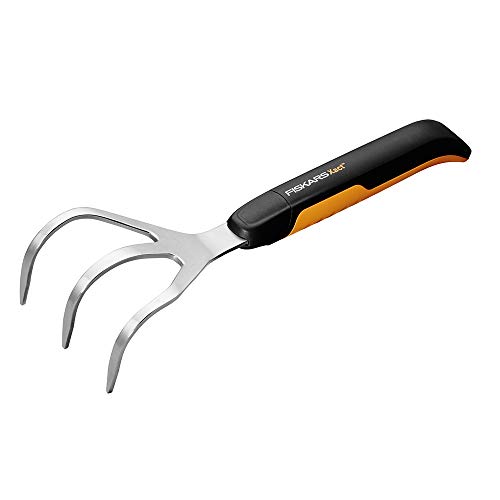
The Xact is Fiskars’ heavier-duty answer in the same category. Its head is stainless steel, and the tines are deep and curved, a shape that bites into a crusted surface and pulls through it rather than skating across the top. The listing highlights a strong, fastened connection between head and handle, which addresses the failure point that matters most on a tool used with a pulling, levering motion.
The handle is the other point of difference. It is longer and weighted compared with a standard hand tool, with a SoftGrip surface and multiple grip positions, so gardeners can choke up for precision around seedlings or shift back for leverage on a stubborn patch. A hang hole is built in for storage. The extra handle weight is deliberate, but it does make this the least featherweight option here, which is worth weighing if hand fatigue is the main concern.
Specs
- Head material: stainless steel
- Tines: deep, curved
- Handle: SoftGrip, longer weighted handle, multiple grip positions, hang hole
- Model: 315510-1001
- Weight: not stated
- Warranty: not stated
Who it’s for: Gardeners who want deeper curved tines and extra leverage for compacted beds, and anyone who prefers a longer handle with several grip positions for close work.
Who should skip: Gardeners who want the lightest possible tool, since the weighted handle adds heft, and anyone who prefers a plain wood grip.
AMES 2446300 Tempered Steel Hand Cultivator

The AMES 2446300 is the traditional pattern in this guide: a tempered steel head on a wood handle, sized at about eleven inches for work in beds and planters. The listing describes the job plainly: loosening packed soil, raking and smoothing the surface of beds and planters, and dislodging small weeds around perennials and annuals without tearing up the plants themselves.
Tempered steel tines are stiff and hold up well to repeated pulling through firm soil, and the wood handle includes a hang-up hole for storage. Wood does ask for a little more care than a synthetic grip: it benefits from being stored dry and given an occasional wipe of oil, and it offers no cushioning. In return, gardeners get the simple, balanced feel that has made this pattern a shed staple, in a compact size that suits containers and tight border work.
Specs
- Head material: tempered steel
- Tines: three
- Handle: wood with hang-up hole
- Length: about 11 inches
- Weight: not stated
- Model: 2446300
Who it’s for: Gardeners who prefer a classic wood handle and a compact eleven-inch tool for beds, planters, and smoothing soil around established perennials and annuals.
Who should skip: Gardeners who want a cushioned ergonomic grip, or anyone who stores tools outdoors where an untreated wood handle will weather quickly.
Garden Weasel Double-Sided Garden Cultivator/Tiller 91367

The Garden Weasel 91367 takes a different approach: it is a double-sided tool, with a three-pronged cultivator on one face and a tiller on the other. The listing describes the cultivator side as simplifying raking, aerating, cultivating, and tilling, so a gardener can break up a planting row, flip the tool, and work the surface finer without walking back to the shed for a second implement.
At roughly twelve and three-quarter inches long, it sits at the larger end of this group, and the maker backs it with a lifetime guarantee against defects in materials and workmanship. The listing does not state a weight or a handle material, so gardeners who care about either point should treat them as unknowns rather than assume a cushioned grip. What is clear is the format: two working faces in one handheld tool, aimed at planting time, when loosening and finishing a bed happen in the same pass.
Specs
- Head design: double-sided cultivator and tiller
- Tines: three prongs on the cultivator face
- Size: 12.75 x 3.1 inches
- Handle: not stated
- Weight: not stated
- Warranty: lifetime guarantee against defects
- Model: 91367
Who it’s for: Gardeners who want one handheld tool that both cultivates and tills when preparing beds for planting, and anyone short on storage space for separate tools.
Who should skip: Gardeners who want a stated cushioned or ergonomic grip, or a single-purpose claw with a deep curved tine profile for compacted soil.
Frequently asked questions
What is a hand cultivator used for?
A hand cultivator loosens and aerates the top layer of soil in beds, borders, planters, and raised beds. Gardeners use it to break up surface crust, mix compost or feed into the soil around plants, and dislodge small weeds. It is a finishing and maintenance tool rather than a digging tool, so it is not the right choice for breaking new ground or turning over an untouched plot.
How is a hand cultivator different from a hand weeder?
A cultivator has a fan of three tines that rakes through soil, loosening it across a wider path with each pull. A hand weeder has a single blade, forked tip, or narrow hook designed to get under one weed and lever out its root. The two tools overlap on light weeding, but a cultivator is primarily a soil tool, while a weeder is primarily a root-removal tool.
Which head material is best: cast aluminum, stainless steel, or tempered steel?
Cast aluminum is the lightest and never rusts, which suits long sessions in worked beds, but it is the least suited to prying against stones. Stainless steel resists rust and handles clay and stony soil well, at a little more weight. Tempered steel is stiff and durable for firm soil, and it is the traditional pairing with a wood handle, though it should be stored dry to keep corrosion away.
How should a hand cultivator be cared for?
Brush or rinse soil off after use and let the tool dry before storing it, ideally hung up by the hole most of these handles include. Steel heads benefit from a light wipe of oil before winter storage, and a wood handle lasts longer if it is kept dry and oiled occasionally. Storing any cultivator clean and dry matters more than the brand, since damp soil left on tines is what starts rust and dulls edges.
Final verdict
Every tool here loosens bed soil with three tines; the choice comes down to material and handle. Pick the Fiskars Ergo Cultivator for the lightest, rust-proof everyday option, the Garden Guru stainless rake for clay and rocky ground, and the Fiskars Xact when deep curved tines and a longer weighted handle sound useful for compacted beds. Choose the AMES 2446300 for a traditional wood-handled tool at a handy eleven inches, and the Garden Weasel 91367 if a double-sided cultivator and tiller in one tool fits how the garden gets planted each season.
Product and ASIN Reference
| Product | ASIN |
|---|---|
| Fiskars Ergo Cultivator | B004S0PGUC |
| Garden Guru Stainless Steel Hand Rake Soil Tiller | B08972G7N8 |
| Fiskars Xact Hand Cultivator | B087RNMSYK |
| AMES 2446300 Tempered Steel Hand Cultivator | B0792M9TL5 |
| Garden Weasel Double-Sided Garden Cultivator/Tiller 91367 | B08C2RPVF6 |
FAQ
What is a hand cultivator used for?
How is a hand cultivator different from a hand weeder?
Which head material is best: cast aluminum, stainless steel, or tempered steel?
How should a hand cultivator be cared for?
More from Amazon
Programs that pair well with the guide above. Offers and eligibility are set by Amazon and may change.
Free shipping on eligible items, Prime Video and more. Eligible new members can start with a free trial.
Start a Prime free trialAudiobooks and podcasts to listen to on the go. Eligible new members can start with a free trial.
Try Audible freeAd-free music streaming. Eligible new subscribers can start with a free trial.
Try Music Unlimited freeA free business account with business pricing and bulk-buying tools for work, shop or home office.
Create a business accountAs an Amazon Associate we earn from qualifying purchases.



Write Your Review
No reviews yet. Be the first to share your experience!