
Key takeaways
- Compare the best glove liners in silk, merino wool, and heat-reflective synthetics for layering under winter gloves, with specs, fit notes, and FAQs.
A good pair of glove liners does quiet, unglamorous work: it adds a layer of insulation inside your winter gloves, moves sweat away from your skin, and gives your fingers a few protected seconds of dexterity when the outer gloves have to come off. Skiers, snowboarders, ice fishers, winter hikers, and anyone who works outdoors in the cold all rely on that thin base layer more than the thickness of the fabric suggests.
The five glove liners below cover the three material families that dominate the category. Merino wool blends lead on warmth and moisture management, silk liners are the thinnest and smoothest option for tight-fitting shells, and modern synthetics add heat-reflective panels or touchscreen fingertips. Each pick is a true liner, made to be worn under an outer glove or mitten rather than as a standalone winter glove.
As an Amazon Associate, we earn from qualifying purchases.
How to Choose Glove Liners
Start with material, because it decides most of the wearing experience. Merino wool regulates temperature across a wide range, keeps insulating when it picks up moisture, and resists odor on multi-day trips. Its weakness is abrasion: a wool knit worn alone against zippers, buckles, and hook-and-loop fasteners will pill and thin faster than a synthetic. Silk is the classic liner fiber for a reason. It is exceptionally smooth, so shells slide on and off without bunching, and it packs down to almost nothing. Silk adds modest warmth for its weight, but it is delicate, usually needs gentle washing, and snags on rough fasteners. Synthetic liners, usually polyester knits, dry the fastest, tolerate rough handling and machine washing, and are the usual home of touchscreen fingertips and heat-reflective prints. They hold odors sooner than wool and can feel clammy in milder weather.
Fit matters as much as fiber. A liner should sit close to the skin with no loose fabric at the fingertips, because bunched material traps cold air and ruins dexterity. If your outer gloves already fit snugly, expect to size the shell up or choose the thinnest liner you can. Check the cuff style as well: a longer rib knit cuff that tucks under a jacket sleeve seals the gap where cold air usually enters.
Finally, match the liner to the job. For phone use at the lift or on the trail, look for touchscreen-compatible thumb and index fingertips. For high-output activities like skinning uphill or winter running, prioritize breathability and drying speed over raw warmth. For stationary cold, such as ice fishing or watching winter sports, pick the warmest knit and let the outer mitten do the weather protection. No liner is waterproof or windproof on its own, so treat wind and wet snow as the shell layer’s responsibility.
Minus33 Merino Wool Glove Liner

The Minus33 glove liner is the warmth-first option in this roundup, built by a New Hampshire company that works almost exclusively in merino wool. The knit blends merino with stretch nylon and elastic, which gives it a denser, more substantial feel than the silk liners below while staying thin enough to sit under a ski glove or work glove. Minus33 positions it for three-season wear: alone on mild days when a little dexterity cover is enough, and as a base layer when the temperature drops well below freezing.
Because the fabric is mostly wool, it manages moisture the way wool base layers do, absorbing vapor before it condenses and keeping some insulating value when damp. The trade-off is the lack of touchscreen fingertips, so a phone check means pulling the outer glove and liner tip back, and the knit deserves the same care as other wool layers even though the listing rates it as machine washable and dryable.
Specs
- Material: 85 percent merino wool, 10 percent stretch nylon, 5 percent elastic
- Model: 3600
- Weight: 1.6 oz (45 g) for size Large
- Sizes: S to XL
- Colors: Black, Ash Gray, Navy Blue
- Touchscreen fingertips: No
- Care: Machine washable and dryable
Who it’s for: skiers, hunters, ice fishers, and winter workers who want the warmest natural-fiber liner and do not need to use a phone with their liners on. Who should skip: anyone who needs touchscreen control without removing layers, or who wants the absolute thinnest liner for very tight-fitting shells.
Smartwool Liner Glove

Smartwool’s Liner Glove is the dexterity pick, a lightweight knit that splits its fabric almost evenly between merino wool and recycled polyester. The wool brings temperature regulation and odor resistance, while the polyester content adds abrasion resistance and helps the glove hold its shape season after season. A small amount of elastane in the knit keeps the fit close without squeezing.
The feature that sets it apart is the touchscreen-compatible thumb and index finger, which handles lift-queue phone checks, trailhead photos, and car touchscreens without exposing skin to the cold. A rib knit cuff finishes the wrist with a bulk-free seal that layers cleanly under a shell cuff. At well under two ounces, it disappears inside a mitten and takes up almost no room in a jacket pocket, which makes it an easy carry as a backup layer.
Specs
- Material: 48 percent merino wool, 48 percent recycled polyester, with elastodiene and elastane
- Model: SW011555
- Weight: 43 g (1.52 oz)
- Sizes: XS to XL
- Touchscreen fingertips: Yes, thumb and index finger
- Cuff: Rib knit
- Colors: Black and Deep Navy among the listed options
Who it’s for: skiers, commuters, photographers, and winter hikers who want one liner that handles both layering duty and standalone phone use on cool days. Who should skip: buyers chasing maximum warmth per layer for stationary cold, since the thin knit is built for versatility rather than deep-freeze insulation.
Terramar Thermasilk Glove Liner
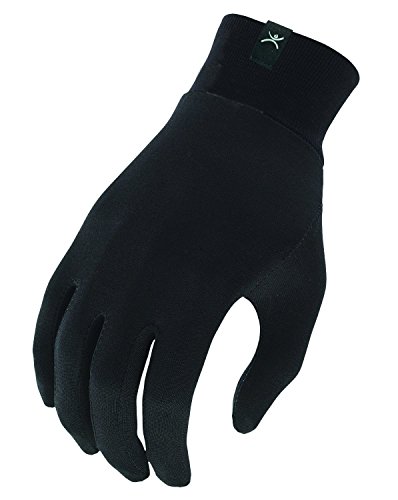
The Terramar Thermasilk is the traditional silk liner, updated with the brand’s ClimaSense treatment and an ec2 Quick-Dri finish intended to help the fabric regulate temperature and dry faster than untreated silk. The fabric is pure filament silk, which gives it the smoothest surface in this group: outer gloves glide over it, and the liner itself adds almost no bulk, making it the safest choice for shells that already fit closely.
Terramar lists the liner for skiing, hiking, and general cold-weather layering in sizes from small through extra large, in black or a natural undyed tone. Silk’s limits are durability and care. The knit is thin enough that rough handling, snags, and hook-and-loop closures can damage it, and it provides the least standalone warmth here, so it earns its place as a layer rather than a glove. Within that role, though, its comfort against the skin and its pack size are hard to beat.
Specs
- Material: 100 percent filament silk
- Model: S491
- Treatment: ClimaSense thermoregulation with ec2 Quick-Dri finish
- Weight: 22.68 g listed for size Medium
- Sizes: S to XL
- Colors: Black and Natural
- Touchscreen fingertips: No
- Care: Machine wash per the listing
Who it’s for: skiers and travelers with snug-fitting outer gloves, anyone sensitive to synthetic next-to-skin feel, and ultralight packers counting every gram. Who should skip: buyers who are hard on gear, need touchscreen access, or want a liner that can double as a mild-weather glove on its own.
Seirus Innovation 2116 Heatwave Glove Liner

The Seirus 2116 Heatwave takes the synthetic route and adds a trick the natural-fiber liners cannot match: a dual-stage Heatwave system printed into the fabric. According to Seirus, a kinetic layer converts energy into heat while a reflective layer bounces body warmth back toward the hand, so the liner works to hold onto heat rather than only slowing its escape. The base fabric is a form-fitting polyester knit that stretches over the hand and slides under a shell without bunching.
Seirus sells the 2116 in two combined sizes, and the listing describes it as a liner that can also be worn alone in milder conditions. As a polyester knit, it should dry quickly after a sweaty climb and tolerate machine washing, which suits commuters and resort skiers who rotate the same pair all week. The listing does not state a weight or touchscreen fingertips, so treat it as a warmth-focused liner rather than a phone-friendly one.
Specs
- Material: 100 percent polyester
- Model: 2116
- Heating system: Heatwave dual stage, kinetic and reflective layers
- Fit: Form fit
- Sizes: SM/MD and LG/XL
- Weight: not stated
- Touchscreen fingertips: not stated
- Care: Machine wash per the listing
Who it’s for: cold-handed skiers, snowboarders, and winter commuters who run cold and want a synthetic liner engineered to retain heat, plus anyone who prefers easy-care fabric. Who should skip: natural-fiber loyalists, and buyers who need a confirmed weight for ultralight packing lists.
ALASKA BEAR Natural Silk Gloves Thermal Liner
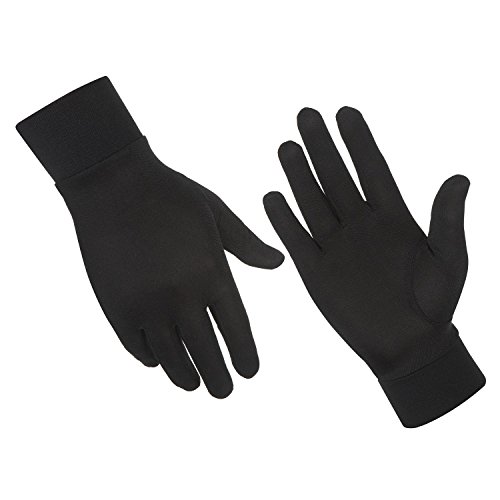
ALASKA BEAR’s liner gloves are the second silk option in this guide, knitted from mulberry silk with enough stretch to pull on easily and sit smoothly under an outer glove. The brand’s sizing runs unusually wide, from extra small through double extra large, with hand-size guidance for each step, which makes this a practical pick for people who fall outside the usual small-to-large range.
The care instructions tell the real silk story: hand wash in cold water with a mild detergent, and keep the gloves away from hook-and-loop fasteners, which can tear the knit. In return, the silk offers a soft, low-bulk layer that takes the edge off cold steering wheels, early morning dog walks, and drafty workspaces, and it layers under riding gloves, ski gloves, and work gloves alike. The listing does not state a weight, and there are no touchscreen fingertips, so this is a straightforward, comfort-first liner.
Specs
- Material: Knitted mulberry silk, stretchy
- Sizes: XS to XXL, matched to hand sizes from about 6.5 to 11
- Fit: Unisex, pull-on
- Care: Hand wash cold with mild detergent; keep away from hook-and-loop fasteners
- Weight: not stated
- Touchscreen fingertips: No
Who it’s for: riders, drivers, and outdoor workers who want a silk liner in an extended size range, and anyone layering under gloves for chores in cool rather than severe cold. Who should skip: buyers who want machine-wash convenience, touchscreen use, or the warmest possible knit for sub-zero layering systems.
Frequently Asked Questions
Can glove liners be worn on their own?
Yes, in mild conditions. Thin liners work as light gloves for cool fall days, driving, and high-output exercise, but none of them block wind or water, so in real winter weather they belong under a shell glove or mitten.
Which liner material is warmest?
For the same thickness, merino wool blends generally feel warmest because they keep insulating when damp and manage sweat well. Silk is the thinnest and smoothest but adds the least insulation, while synthetics sit in between and dry the fastest.
How should glove liners fit?
Close to the skin, with the fabric reaching the end of each fingertip and no bunching in the palm. If your outer gloves are already snug, choose the thinnest liner or size the outer glove up, because a compressed layer loses warmth and dexterity.
How do you wash glove liners?
Follow the maker’s instructions for each pair. Polyester and many wool-blend liners tolerate machine washing, while silk liners often need a cold hand wash with mild detergent. Air drying flat helps every knit here keep its shape.
Final Verdict
There is no single best glove liner here, only the best match for a hand and a shell. The Minus33 is the pick for maximum natural-fiber warmth, the Smartwool Liner Glove for touchscreen convenience in a durable wool blend, and the Terramar Thermasilk for the thinnest, smoothest layer under close-fitting gloves. The Seirus 2116 Heatwave suits cold hands that want a synthetic liner built to hold heat, and the ALASKA BEAR silk liner covers the widest size range. Choose by material first, check the fit against your outer gloves, and any of these five will make a winter glove system noticeably more comfortable.
Product and ASIN Reference
| Product | ASIN |
|---|---|
| Minus33 Merino Wool Glove Liner | B0065P1PT4 |
| Smartwool Liner Glove | B09B9RD4X5 |
| Terramar Thermasilk Glove Liner | B000V5DB1E |
| Seirus Innovation 2116 Heatwave Glove Liner | B00DSQS2C6 |
| ALASKA BEAR Natural Silk Gloves Thermal Liner | B00PIMIZWA |
More from Amazon
Programs that pair well with the guide above. Offers and eligibility are set by Amazon and may change.
Free shipping on eligible items, Prime Video and more. Eligible new members can start with a free trial.
Start a Prime free trialAudiobooks and podcasts to listen to on the go. Eligible new members can start with a free trial.
Try Audible freeAd-free music streaming. Eligible new subscribers can start with a free trial.
Try Music Unlimited freeA free business account with business pricing and bulk-buying tools for work, shop or home office.
Create a business accountAs an Amazon Associate we earn from qualifying purchases.
Write Your Review
No reviews yet. Be the first to share your experience!