
Key takeaways
- Find the best glove dryers for ski gloves and mittens, from forced-air and wall-mount models to travel and budget picks that keep hands warm and dry.
Gloves and mittens are the hardest winter gear to dry. Boots stand open and air out on their own, but a glove traps the day’s moisture deep in the fingers, where room air barely reaches. Damp insulation loses its warmth fast, so a pair that felt fine in the morning can leave your hands cold by midday, and gloves left wet night after night pick up odor and stiff, cracked linings. A glove dryer solves the problem at the source by moving air through the fingers and palm, drying the insulation from the inside out.

This guide rounds up five dryers chosen with gloves and mittens as the priority, not as an afterthought to footwear. The picks cover the main ways households dry handwear: a fan-driven countertop unit for fast daily turnarounds, a wall-mount rack that keeps a mudroom tidy, a compact travel pair for hotel rooms, a non-electric vent dryer that borrows heat your home already makes, and a simple budget kit for a single pair.
As an Amazon Associate, we earn from qualifying purchases.
Quick answer
For most households, the MaxxDry Heavy-Duty is the glove dryer to buy first: its fan-driven tubes dry two pairs of gloves in about an hour, with a heat or no-heat setting that suits leather, wool and synthetic shells alike. Homes short on outlets should look at The Green Glove Dryer; travelers and single-pair users are covered by the picks below.
MaxxDry Heavy-Duty Boot, Shoe, and Glove Dryer
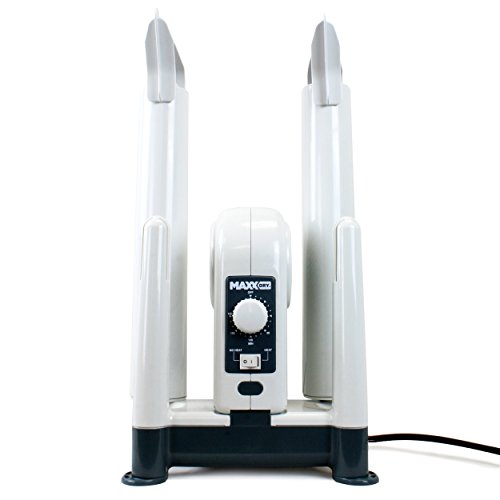
The MaxxDry Heavy-Duty earns the top spot because it treats gloves as a primary load rather than a side job. A fan in the base pushes air through four upright tubes, and the listing states that this forced-air design gently dries four garments in about one hour. In glove terms that means two pairs at once, so a couple home from the slopes can run everything in a single cycle instead of taking turns.
A heat or no-heat switch lets you match the cycle to the material. Heated air speeds things up for synthetic ski gloves and fleece mittens, while the unheated setting moves plain air for leather gloves and other shells you would rather keep away from warmth. The maker rates the airflow as safe for all fabrics, and extension tubes in the box reach into tall items when boots or waders share the load. A timer ends the cycle on its own, so an evening load needs no watching.
The trade-offs are size and sound. This is a countertop appliance with a footprint closer to a toaster than a trivet, and a fan-driven dryer is never silent, even if the hum fades into background noise in a mudroom or garage. Households that dry gloves daily will accept both points easily; occasional users may prefer the quieter racks further down the list.
DryGuy Dry Rack Boot & Glove Dryer
The DryGuy Dry Rack suits homes that want gloves off the counter and onto the wall. The listing describes a modular drying system with three mounting options, with hardware for wall, floor and freestanding setups included, so the rack can hang in a mudroom, stand by the door, or move to a cabin for the season. Rails hold gloves and mittens upright and open, which lets warm room air circulate through the cuffs while the fingers drain downward.
Instead of a fan, the Dry Rack uses a silent radiant heating system. There is no motor to hear through a bedroom wall and no blast of hot air, which makes it a calm choice for entryways near living space and for overnight cycles. Radiant warmth is gentle, and that gentleness suits leather ski gloves, wool mittens and kids’ handwear that you would rather dry slowly than blast. The modular design also expands, so the system can grow with the household.
The honest limitation is speed. A radiant rack works in hours rather than minutes, and it asks for a planned routine: hang the gloves when you come in, and they are ready the next morning. Anyone who regularly walks in with soaked gloves an hour before heading out again should look at the fan-driven MaxxDry above instead.
DryGuy Travel Dry DX Boot Dryer and Shoe Dryer
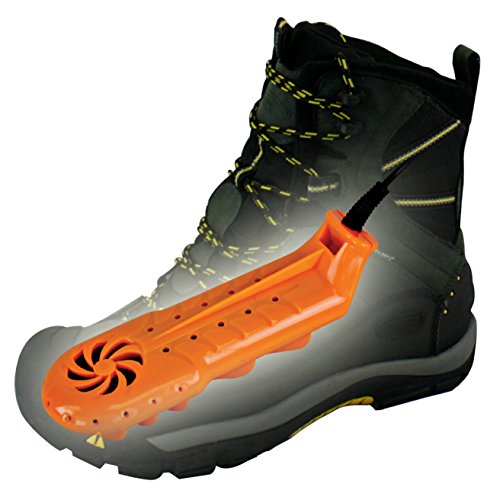
The Travel Dry DX is the pick for glove drying away from home. The dryer is a pair of compact inserts that slide inside gloves, boots or shoes, and the pair weighs only about 7.6 ounces, so it disappears into a boot bag or carry-on next to the gear it serves. In a hotel room or rental condo, the inserts warm gently and dry a pair of ski gloves overnight, which beats draping them over a bathroom rail and hoping for the best.
Because the inserts sit inside the glove, the warm air works exactly where moisture collects: the fingers and palm. There are no tubes to balance and no rack to assemble, and the pair stores away in a gear bin between trips. For fly-to ski weeks, travel hockey tournaments and work trips into cold country, that pack-and-forget size is the whole point.
Capacity is the clear limit. One pair at a time is all the Travel Dry DX handles, and its gentle heat is slower than a full-size fan unit. It is a travel tool first and a home dryer second, so households drying several pairs every night should treat it as a companion to a bigger dryer rather than a replacement for one.
The Green Glove Dryer

The Green Glove Dryer takes a different route entirely: it uses no electricity at all. The base sits over a floor heat register, or attaches at a wall vent, and a row of hollow nozzles channels the warm air your heating system already produces up into gloves, mittens, hats and socks. This listing includes two extension nozzles, and the maker notes the dryer is safe for leather, wool, fleece, neoprene, canvas and similar fabrics, since the air it delivers is only as warm as the air heating the room.
For a family mudroom, the appeal is the running cost and the silence. There is nothing to plug in, nothing to switch on, and no fan to hear; the dryer simply works whenever the heat runs, which in a northern winter is most of the day. Several pairs can share the nozzles at once, so the whole family’s handwear dries in one passive cycle. The unit is made in the USA and weighs about a pound, light enough to take along to a rental house or cabin.
The conditions matter, though. A home heated by radiators, baseboards or a wood stove gives this dryer nothing to borrow, and drying speed follows the heating cycle rather than your schedule. If your house has floor registers near the door where gear comes off, few dryers are simpler. If it does not, pick one of the powered models above.
Glove AIR Athletic Glove Dryer Kit
The Glove AIR kit is the budget answer for a single pair. The box holds one pair of air-drying holster inserts and a bottle of absorbent deodorizing spray. Each insert slips into a glove and holds it open in a natural curve, so room air can reach the lining and carry moisture away, while the spray tackles the odor that builds up in hard-used handwear. The kit was designed with athletic gloves in mind, which covers hockey, boxing and goalkeeper gloves as readily as ski gloves.
There is no heat, no fan and no cord, so drying is the slowest in this guide and depends on the room: a warm, dry space near moving air gives the best result. In return, the kit asks for almost nothing. It packs flat and can live in a gym bag so the inserts stay with the gloves they serve. For a young hockey player, a boxer, or a skier with one good pair and no wish to add another appliance, that simplicity is a fair trade.
Be honest about the limits: passive inserts freshen and dry gradually, and they will not rescue a soaked pair between a morning and afternoon session. Treat the Glove AIR as steady daily care for one pair.
How to choose
Match the dryer to where your gloves get wet and how fast they must be ready. Fan-driven units such as the MaxxDry dry a soaked pair in about an hour and suit daily skiers, snowboard crews and outdoor workers on a schedule. Radiant racks and vent dryers work overnight and suit households with a steady come-home routine. Travel inserts trade speed and capacity for a size that fits in a boot bag.
Count your pairs honestly. A dryer with four tubes or a wide rack handles a family’s gloves in one cycle, while a single-pair kit serves one person’s gear. If boots will share the dryer, check that the tubes or rails fit both loads, and remember that gloves dry best when air reaches the fingertips, so open cuffs and upright fingers matter more than raw heat.
Think about your heating and your space. Homes with forced-air floor registers can run a non-electric vent dryer for free, while homes heated by radiators need a powered model. Wall-mount racks keep counters clear in small mudrooms; countertop units need a home near an outlet. Finally, check the maker’s guidance for your glove materials: leather, wool and waterproof membranes all prefer gentle warmth over high heat, so a heat or no-heat switch is worth having.
Who should skip
Skip this category if your gloves already dry fully overnight on a warm vent or boot room rail and never go back on damp; a dryer solves a moisture problem, and not every household has one. Skip it, too, if the only wet gear in the house is footwear: a dedicated boot dryer with taller tubes will serve you better than a glove-first pick, and this site’s boot dryer guide covers that ground.
Pass on the passive and radiant picks if your routine involves back-to-back sessions with soaked gloves, since only a fan-driven unit turns a pair around in about an hour. Pass on the travel inserts as your only dryer if several family members ski, because one pair per cycle will leave a queue by the door. And if your gloves carry maker instructions against any heat at all, confirm the care guidance before using a heated model, or choose the unheated airflow and vent options in this list.
Frequently Asked Questions
How long does a glove dryer take to dry ski gloves?
It depends on the type. A fan-driven dryer such as the MaxxDry can dry a pair in about an hour, because moving air reaches the fingers where moisture collects. Radiant racks, vent dryers and travel inserts work more gently and usually need several hours or an overnight cycle.
Can a glove dryer damage leather gloves or waterproof linings?
The dryers in this guide use low, controlled heat or plain moving air rather than the high temperatures of a clothes dryer or radiator, and several offer an unheated setting for delicate shells. Leather gloves, wool mittens and gloves with waterproof membranes are generally better off on the coolest setting, and the glove maker’s care instructions should always win if they advise against heat entirely.
Do these dryers work for mittens and glove liners too?
Yes. Mittens are often easier than gloves because the single open compartment lets air circulate freely, and the nozzles, tubes and inserts in this guide all fit mitten shapes. Thin liners dry quickly on any of these dryers and can share a cycle with their shell gloves, which suits skiers who run a liner-and-shell system.
Where is the best place to set up a glove dryer?
Put it where wet gear enters the house: a mudroom, entry bench or garage corner near an outlet for powered models. Vent dryers need a floor register or wall vent with room above it for gloves to stand upright. Keep any dryer on a surface that can take drips, since soaked gloves shed water as they dry, and give the unit a little clearance so air can move around it.
Final verdict
For most winter households, the MaxxDry Heavy-Duty is the glove dryer to own: forced air, room for two pairs at once, and a heat or no-heat choice that respects leather as well as synthetics. The DryGuy Dry Rack is the better answer when wall space, silence and gentle overnight drying matter more than speed, and the Travel Dry DX covers trips without adding bulk to a gear bag. Homes with forced-air vents should give The Green Glove Dryer a look for its zero running cost, while the Glove AIR kit keeps one athletic pair fresh for very little money. Any of the five beats putting on damp gloves for another cold morning.
Product and ASIN Reference
| Product | ASIN |
|---|---|
| MaxxDry Heavy-Duty Boot, Shoe, and Glove Dryer | B014SB2X0G |
| DryGuy Dry Rack Boot & Glove Dryer | B010A5J4U6 |
| DryGuy Travel Dry DX Boot Dryer and Shoe Dryer | B010A5JBPO |
| The Green Glove Dryer (Eco Dryer Tan with 2 Extension Nozzles) | B07J4W276D |
| Glove AIR Athletic Glove/Shoe Dryer and Deodorizer Kit | B00TJE19BW |
FAQ
How long does a glove dryer take to dry ski gloves?
Can a glove dryer damage leather gloves or waterproof linings?
Do these dryers work for mittens and glove liners too?
Where is the best place to set up a glove dryer?
More from Amazon
Programs that pair well with the guide above. Offers and eligibility are set by Amazon and may change.
Free shipping on eligible items, Prime Video and more. Eligible new members can start with a free trial.
Start a Prime free trialAudiobooks and podcasts to listen to on the go. Eligible new members can start with a free trial.
Try Audible freeAd-free music streaming. Eligible new subscribers can start with a free trial.
Try Music Unlimited freeA free business account with business pricing and bulk-buying tools for work, shop or home office.
Create a business accountAs an Amazon Associate we earn from qualifying purchases.


Write Your Review
No reviews yet. Be the first to share your experience!