
Key takeaways
- The best ergonomic snow shovels, compared by handle design, blade width, and weight to make winter clearing easier on your back.
Shoveling snow hurts backs for a simple reason: a straight handle forces you to bend, lift, and twist in one motion, hundreds of times per storm. Ergonomic shovels attack that motion from different angles. Some bend the shaft so your hands stay higher, some add a second grip that changes the leverage of the lift, and some widen the blade so fewer lifts clear the same driveway. The right choice depends on which part of the job bothers you most: the bend, the lift, or the number of trips.
This guide is for people who clear their own driveway and feel it the next morning, for older homeowners who want to keep shoveling safely, and for anyone who has decided that a bent handle is worth more than a second cheap straight shovel. The four shovels below were picked from their Amazon listing names and specifications, comparing handle shape, blade design, grip style, and weight.
Quick Picks
As an Amazon Associate we earn from qualifying purchases.
| Product | Best for | Key spec from title |
|---|---|---|
| Snow Joe SJ-SHLV20 Shovelution 20-Inch Strain-Reducing Snow Shovel | Lifting with spring-assisted leverage | 20-inch blade with spring-assisted handle |
| TRUE TEMPER 1603400 Poly Snow Shovel/Pusher with Ergonomic D-Grip Steel Handle | All-round pushing and scooping on any surface | 18-inch poly blade with ergonomic D-grip steel handle |
| Garant True-Temper 24″ High Capacity Poly Sleigh Shovel | Moving big loads across wide areas | 24-inch poly sleigh blade with coated steel ergonomic handle |
| True Temper 1625300 SnoBoss Poly Snow Shovel/Pusher/Scraper | Pushing, scraping, and scooping with two grip positions | 26-inch blade with ergonomic aluminum handle |
How to Choose
Handle shape and the bend it removes
The bend in the handle is the whole point of an ergonomic shovel, and the shapes differ. A curved steel shaft raises your hands a few inches, which shortens the bend at the waist on every lift. A spring-assisted second handle goes further: it acts as a fulcrum, shifting lifting leverage to the lower hand so the big muscles of the upper body do more of the work. A straight handle with a good D-grip is not ergonomic in the same sense, no matter how comfortable the grip feels. When you compare listings, look for the words bent, curved, or spring-assisted, and check the overall length against your height.
Blade width, depth, and what you lift
Blade size sets the weight of every load, and ergonomic design is partly about keeping that load sensible. An 18-inch blade lifts a manageable amount per scoop, while a 24-inch sleigh blade carries a much bigger load that you push rather than lift. Wide blades cut the number of passes on a driveway but punish you if you try to throw a full load. Deep bowls hold more snow for throwing over banks, while shallow pushers keep snow rolling on the ground. Choose the blade for the motion you will use most: push wide, lift narrow.
Grip design and gloved hands
A grip that works barehanded in a store can fail in thick gloves at twenty degrees. Oversized D-grips are sized for gloved hands and give a secure hold for steering and lifting, while a second D-ring grip gives the lower hand a real place to pull. Foam-padded grips stay warmer and kinder to cold hands than bare metal. Check whether the listing mentions an oversized grip or a dual grip, and think about how the grip feels when your hands are cold and wet rather than warm and dry.
Weight and where budget models cut corners
A shovel that weighs three pounds leaves more of your strength for the snow, while a five-pound shovel adds up over a driveway. Budget ergonomic shovels often cut corners in the same places: a blade that flexes under a full load, a handle joint held by a single bolt, and no wear strip on the cutting edge. A flexing blade spills snow before the throw, and a loose handle joint turns every lift into a wobble. Check the listing for blade material, handle material, wear strip type, and warranty, and be wary of any ergonomic claim that the handle shape does not support.
The 4 Best Options
Snow Joe SJ-SHLV20 Shovelution 20-Inch Strain-Reducing Snow Shovel

The Shovelution is the most mechanically different shovel in this guide. Its spring-assisted handle works as a fulcrum, sending lifting leverage to the lower hand so the upper body does the lifting and the back does less of it. The 20-inch impact-resistant blade covers a wide path, the D-ring handle grip improves posture and reduces the need to bend, and the whole tool folds for storage. It is the shovel for people whose main complaint is the lift itself, not the walk to the end of the driveway.
Specs
- Blade: 20-inch impact-resistant blade
- Handle: spring-assisted handle acting as a fulcrum, aluminum construction
- Grip: D-ring handle grip for comfort and posture
- Weight: 3.5 pounds
- Design: folds for storage
Best for: Homeowners who lift and throw most of their snow and want the spring-assist handle to take the strain out of each load.
Watch out for: The spring mechanism adds moving parts that need to stay clear of packed ice, and the 20-inch blade still carries a full load when you throw it.
TRUE TEMPER 1603400 Poly Snow Shovel/Pusher with Ergonomic D-Grip Steel Handle

The True Temper 1603400 is the classic ergonomic combination shovel: an 18-inch poly blade shaped to both scoop and push, a nylon wear strip that protects decks and patios, and a bent steel handle with an oversized D-grip. At three pounds it is the lightest tool in this guide, and the 54-inch overall length suits most adults. The combination blade means one tool covers the driveway, the walk, and the deck without swapping. It is the shovel for people who want ergonomic help without a mechanism to learn.
Specs
- Blade: 18-inch poly combination blade, 13.5 inches deep
- Wear strip: nylon wear strip, will not damage decks or patios
- Handle: 37.4-inch ergonomic steel handle
- Grip: oversized D-grip for gloved hands
- Overall length: 54 inches
- Weight: 3 pounds
Best for: Everyday clearing on driveways, walks, and decks where you want one light tool that both pushes and scoops.
Watch out for: The poly blade can flex on very firm snow, and the 18-inch width means more passes on a wide driveway than a 24-inch tool.
Garant True-Temper 24″ High Capacity Poly Sleigh Shovel
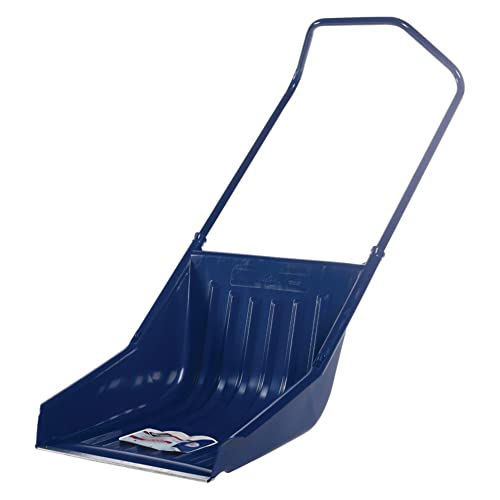
The Garant sleigh shovel looks like a small plow you can walk behind, and that is the idea: a 24-inch poly blade with a big capacity for moving large amounts of snow in long pushes. The coated steel handle is bent into an ergonomic shape that keeps your posture upright while you push, and the whole tool folds down for storage. At 11.48 pounds it is the heaviest tool here, so it suits pushing rather than lifting, and it shines on wide driveways and open areas where the load rolls forward instead of being thrown.
Specs
- Blade: 24-inch high capacity poly blade
- Handle: coated steel ergonomic handle
- Grip: ergonomic grip
- Weight: 11.48 pounds
- Design: foldable for storage
Best for: Wide driveways and open areas where snow is pushed in long passes and lifting is kept to a minimum.
Watch out for: The weight makes it a poor choice for throwing snow over banks, and check the folded size against your storage space before buying.
True Temper 1625300 SnoBoss Poly Snow Shovel/Pusher/Scraper
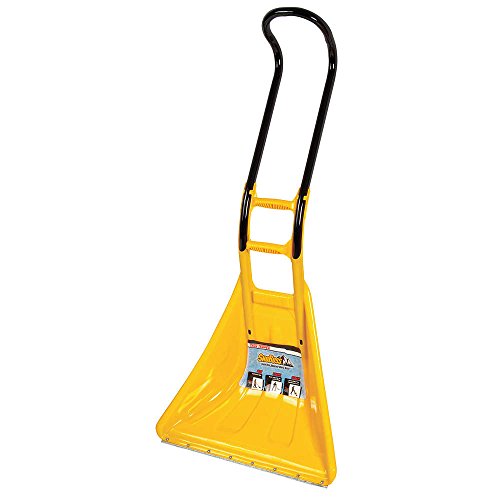
The SnoBoss is a four-way tool: shovel, pusher, scraper, and more, built around a 26-inch blade on a 56-inch aluminum handle. Two grip positions let you change hand placement for pushing versus lifting, and a built-in footstep lets you drive the blade under packed snow with your boot. The 21-inch poly scoop blade handles the lifting work, while the wide stance suits pushing across open pavement. It is the shovel for people who face more than one kind of snow in a single storm and want one tool that adapts.
Specs
- Blade: 26-inch shovel with 21-inch poly scoop blade
- Handle: 56-inch ergonomic aluminum handle
- Grip: two grip positions
- Feature: built-in footstep for driving the blade under packed snow
- Functions: shovel, pusher, and scraper in one tool
Best for: Driveways where snow ranges from light powder to packed drifts and you want grip options plus a footstep for the stubborn patches.
Watch out for: The wide blade is harder to maneuver in tight spots between cars, and the multi-function design means the scoop is shallower than a dedicated scoop shovel.
Which One Fits Your Situation
Your back hurts from lifting, not from walking
Pick the Snow Joe Shovelution SJ-SHLV20. The spring-assisted handle is the only design here that actively changes the mechanics of the lift, shifting leverage to the lower hand so your upper body carries the load. The 20-inch blade is wide enough to keep passes down, and the D-ring grip keeps your posture taller. Use it for the lifting and throwing parts of the job, and let a pusher handle the flat stretches.
You want one light tool for the whole property
Pick the True Temper 1603400. At three pounds with an 18-inch combination blade, it pushes light snow, scoops the piles, and works on decks without gouging them thanks to the nylon wear strip. The bent steel handle and oversized D-grip give ergonomic help without any mechanism to maintain. It is the best single-tool answer for a typical suburban driveway, walk, and deck.
A wide driveway with room to push
Pick the Garant True-Temper 24-inch sleigh shovel. Its big poly blade moves a large load in each pass, and the ergonomic coated steel handle keeps you upright while you walk it forward. Accept the weight, because this tool is meant to be pushed, not lifted. It is the fastest option here for open pavement, and it folds away when the season ends.
Packed snow and drifts that need more than a push
Pick the True Temper SnoBoss. The footstep lets you drive the blade under packed snow, the two grip positions let you switch between pushing and lifting, and the 26-inch width covers ground fast. It is the most adaptable tool in the guide, and the one to reach for when a storm leaves a mix of powder, packed drifts, and icy patches.
Common Mistakes
- Choosing an ergonomic shovel by the grip alone: a comfortable grip on a straight shaft still forces a deep bend on every lift, so the handle shape matters more than the grip padding.
- Buying the widest blade for lifting work: a 24-inch blade full of wet snow is a heavy throw, and the ergonomic handle cannot fix an overloaded scoop.
- Ignoring overall length: a handle that is too short makes you hunch no matter how clever the bend, so check the length against your height before buying.
- Using a sleigh shovel to throw snow over a bank: it is built to push, and lifting its full load defeats the ergonomic design.
- Storing a spring-assisted shovel caked in ice: the mechanism needs to move freely, so knock the ice off before it goes back in the garage.
Frequently Asked Questions
What makes a snow shovel ergonomic?
An ergonomic snow shovel changes the shape of the work, usually with a bent or curved shaft that raises your hands and shortens the bend at the waist, an oversized grip for gloved hands, or a second handle that shifts lifting leverage. The goal is to move the effort from the lower back to the legs and upper body. A comfortable grip alone does not make a shovel ergonomic.
Are spring-assisted snow shovels worth it?
A spring-assisted shovel is worth it if lifting and throwing is the part of the job that bothers you most, because the spring handle acts as a fulcrum and gives the lower hand more leverage. If you mostly push snow on flat ground, a bent-handle pusher gives you the same relief for less complexity. Match the mechanism to the motion you use most.
How heavy should an ergonomic snow shovel be?
Lighter is better for lifting, and most ergonomic scoop shovels weigh between three and four pounds. Pushers and sleigh shovels run heavier because they are built to be walked behind rather than lifted. If a shovel weighs over five pounds, make sure you plan to push with it, not throw with it, or your arms will tire before the driveway is done.
Can an ergonomic snow shovel prevent back pain?
An ergonomic shovel can reduce the strain that causes back pain by shortening the bend and shifting the load to stronger muscles, but it cannot remove the strain entirely. Technique matters too: keep loads small, lift with your legs, avoid twisting while throwing, and take breaks. Anyone with a history of back trouble should check with a clinician before a season of heavy shoveling.
FAQ
What makes a snow shovel ergonomic?
Are spring-assisted snow shovels worth it?
How heavy should an ergonomic snow shovel be?
Can an ergonomic snow shovel prevent back pain?
More from Amazon
Programs that pair well with the guide above. Offers and eligibility are set by Amazon and may change.
Free shipping on eligible items, Prime Video and more. Eligible new members can start with a free trial.
Start a Prime free trialAudiobooks and podcasts to listen to on the go. Eligible new members can start with a free trial.
Try Audible freeAd-free music streaming. Eligible new subscribers can start with a free trial.
Try Music Unlimited freeA free business account with business pricing and bulk-buying tools for work, shop or home office.
Create a business accountAs an Amazon Associate we earn from qualifying purchases.

Write Your Review
No reviews yet. Be the first to share your experience!