
Our Short List of 3

- Best for: Paddlers who want one hardshell for full lake days, slow river runs and the occasional overnight, with the most comfortable seat of the three.
- Length: 12 ft 2 in
- Width: 29 in
- Weight: 49 lb
- Maximum capacity: 325 lb

- Best for: Weekend tourers who store their boat in a closet, travel by car without racks, or want a travel boat for trips away from home.
- Length: 13 ft
- Width: 32 in
- Weight: 42 lb
- Maximum capacity: 450 lb

- Best for: Lighter paddlers, apartment dwellers and anyone whose touring is measured in hours rather than nights, and who values grab-and-go simplicity.
- Length: 10 ft 5 in
- Weight: 26 lb
- Maximum capacity: 250 lb
- Construction: inflatable hull with built-in aluminum ribs in bow and stern
All 3 Picks at a Glance
| Product | Specs | Action |
|---|---|---|
| Wilderness Systems Pungo 120 — OUR TOP PICK |
| Check price on Amazon |
| Advanced Elements AdvancedFrame Expedition Elite |
| Check price on Amazon |
| Advanced Elements AdvancedFrame Sport |
| Check price on Amazon |
Key takeaways
- Compare the best day and weekend touring kayaks sold on Amazon, with hatch storage, seat comfort, weight and capacity specs for full days and overnights.
A day and weekend touring kayak has a specific job: cover real distance on a lake, slow river or sheltered coastline, carry lunch and layers for a full day, and swallow a tent and sleeping bag when the trip stretches to a Saturday night. That rules out short recreational hulls that wander from side to side, and it rules out full expedition sea kayaks that are longer than most cars. The three boats below sit in the productive middle, roughly 10.5 to 13 feet, with the tracking, storage and seat comfort that longer days demand.
Our top pick is the Wilderness Systems Pungo 120, a 12 foot 2 inch sit-inside with the most supportive seat in this group and a sealed stern hatch for overnight gear. The runner-up is the Advanced Elements AdvancedFrame Expedition Elite, a 13 foot inflatable that packs into a duffel yet carries the largest load here, which makes it the weekend-trip choice for anyone without a roof rack. This guide serves three kinds of paddlers: newer tourers who want stability they can trust, apartment and small-car owners who need a boat that stores in a closet, and experienced day paddlers adding a packable second boat. Every pick was chosen from its Amazon listing and the manufacturer’s stated specifications, comparing hull length, storage layout, seat system, weight and rated capacity.
Quick Picks
As an Amazon Associate we earn from qualifying purchases.
| Product | Best for | Key spec |
|---|---|---|
| Wilderness Systems Pungo 120 | All-round day touring with overnight capability | 12 ft 2 in sit-inside, 325 lb capacity |
| Advanced Elements AdvancedFrame Expedition Elite | Weekend loads without a roof rack | 13 ft inflatable, 450 lb capacity |
| Advanced Elements AdvancedFrame Sport | Lightweight day trips and small storage spaces | 10 ft 5 in inflatable, 26 lb packed weight |
How to Choose
Hull length and tracking
Length is the single biggest driver of touring manners. A hull in the 12 to 13 foot range holds a straight line across open water with far less corrective stroking than a 9 or 10 foot recreational boat, and it carries momentum between strokes so a full day of paddling feels shorter. Shorter boats around 10.5 feet turn more easily on winding creeks but ask for more effort on lake crossings. Match the length to your water: open lakes and bays reward the longer hulls, tight rivers reward the shorter one.
Sealed storage and bulkheads
A day trip needs a dry place for a jacket, food and a phone. A weekend trip needs that space to roughly double. Look for a stern hatch sealed by a bulkhead, which keeps gear dry and adds flotation if the cockpit floods. Deck bungees handle the overflow items you want within reach, such as a water bottle or a rolled rain layer. Inflatable touring boats replace hatches with internal cargo space and deck lacing, so check how the listing describes access to the stern area before assuming your tent will fit.
Seat comfort for long hours
On a two hour paddle almost any seat works. On a six hour paddle the seat becomes the product. Look for a padded, adjustable seat with real back support and a way to fine-tune the angle, plus adjustable foot braces so your legs can brace against the hull for efficient strokes. Inflatable seats with lumbar support are a meaningful step up from a simple foam pad, and a high back matters when the day includes a floating lunch stop.
Weight, transport and storage
Every boat here has to get from your home to the water. A rotomolded hardshell around 49 pounds needs a roof rack or a second pair of hands for car topping, and a garage or yard corner to live in. The inflatables in this guide fold into a duffel bag, ride in a trunk, and store on a shelf, which removes the two biggest barriers to paddling more often. The trade is setup time at the launch and a strict drying routine afterward.
Capacity with gear included
Rated capacity covers you, your clothing, your water and everything you load. A solo paddler with a weekend kit can easily add 40 to 60 pounds of gear, food and water to body weight, so leave a comfortable margin under the stated limit. Boats also paddle best well below their maximum; a hull loaded to its ceiling sits low, feels sluggish and ships water in chop. The 450 pound rating on the Expedition Elite is generous for one person, while the 250 pound rating on the AdvancedFrame Sport suits lighter paddlers on day trips only.
The 3 Best Options
Wilderness Systems Pungo 120 — OUR TOP PICK
- Best for: Paddlers who want one hardshell for full lake days, slow river runs and the occasional overnight, with the most comfortable seat of the three.
- Length: 12 ft 2 in
- Width: 29 in
- Weight: 49 lb
- Maximum capacity: 325 lb
Paddlers who want one hardshell for full lake days, slow river runs and the occasional overnight, with the most comfortable seat of the three.
At 49 pounds it is the heaviest boat here to car top alone, and Wilderness Systems classes it as a recreational-touring crossover, so it is happiest on sheltered water rather than exposed open crossings.
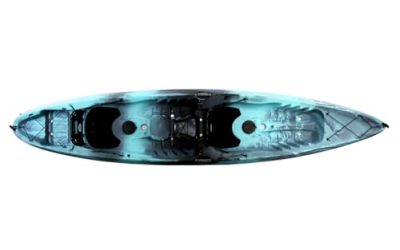
The Pungo 120 is the boat most day and weekend tourers actually need: a stable, confidence-building sit-inside whose 12 foot 2 inch hull tracks cleanly across lakes and slow rivers, with a sealed stern hatch that turns it into a genuine overnight boat. Wilderness Systems builds it around the Phase 3 AirPro seat, a padded, ventilated seat with adjustable support that stays comfortable through the longest paddling day in this guide. The oversized cockpit makes entry and exit easy at awkward launches, the removable dry box and dashboard keep small items organized in front of you, and the SlideLock XL foot braces adjust quickly for different leg lengths or thicker footwear.
Watch out for: At 49 pounds it is the heaviest boat here to car top alone, and Wilderness Systems classes it as a recreational-touring crossover, so it is happiest on sheltered water rather than exposed open crossings.
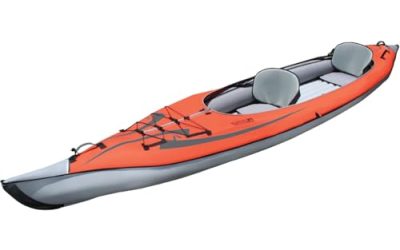
Advanced Elements AdvancedFrame Expedition Elite
- Best for: Weekend tourers who store their boat in a closet, travel by car without racks, or want a travel boat for trips away from home.
- Length: 13 ft
- Width: 32 in
- Weight: 42 lb
- Maximum capacity: 450 lb
Weekend tourers who store their boat in a closet, travel by car without racks, or want a travel boat for trips away from home.
Inflation and drying add time at both ends of the day, and an inflatable hull asks for care around sharp rocks and dock hardware that a plastic hull would shrug off.
The Expedition Elite answers a practical question: how do you own a 13 foot touring kayak when you have no garage and no roof rack? It inflates from a duffel bag into a rigid, closed-deck boat using built-in aluminum ribs in the bow and stern and a high-pressure drop-stitch floor, a construction that gives it far better tracking than basic inflatables. Nine air chambers provide a wide safety margin, the rated capacity of 450 pounds is the highest in this guide, and the rear storage area with deck lacing takes a weekend kit. An adjustable high-back seat with inflatable lumbar support, adjustable foot braces and a tracking fin round out a specification aimed squarely at distance.
Watch out for: Inflation and drying add time at both ends of the day, and an inflatable hull asks for care around sharp rocks and dock hardware that a plastic hull would shrug off.
Advanced Elements AdvancedFrame Sport
- Best for: Lighter paddlers, apartment dwellers and anyone whose touring is measured in hours rather than nights, and who values grab-and-go simplicity.
- Length: 10 ft 5 in
- Weight: 26 lb
- Maximum capacity: 250 lb
- Construction: inflatable hull with built-in aluminum ribs in bow and stern
Lighter paddlers, apartment dwellers and anyone whose touring is measured in hours rather than nights, and who values grab-and-go simplicity.
The 250 pound capacity is the tightest here once gear is added, and the shorter waterline means more strokes per mile than the two longer boats on open water.
The AdvancedFrame Sport is the day-trip specialist of the group and, in the manufacturer’s own listing words, a lightweight day touring kayak. At 10 feet 5 inches and 26 pounds in its bag, it is the boat most likely to live permanently in a car trunk, ready for an unplanned evening paddle. Built-in aluminum ribs in the bow and stern give the hull a defined shape that tracks respectably for its length, the spring valves make inflation and deflation quick, and the package includes the bag and pump, so the listing covers everything needed to get on the water. Its shorter hull gives up some glide and cargo room, which is why it sits third here: for pure day touring near home, that trade is often worth it.
Watch out for: The 250 pound capacity is the tightest here once gear is added, and the shorter waterline means more strokes per mile than the two longer boats on open water.
Which One Fits Your Situation
You paddle lakes and slow rivers all day, with a few overnights a year. Choose the Pungo 120. The seat comfort, sealed hatch and hardshell glide suit exactly that pattern, and it will not ask you to manage inflation before every outing.
You tour on weekends but have no roof rack or garage. Choose the Expedition Elite. It carries the most gear, packs into a duffel, and its framed, drop-stitch construction keeps it honest on longer routes.
You paddle after work and store the boat in a closet or trunk. Choose the AdvancedFrame Sport. It is the lightest and quickest to deploy, and for two to four hour outings its shorter hull is barely a compromise.
You are a heavier paddler or carry camera and fishing gear on day trips. Choose the Expedition Elite for its 450 pound rating, which keeps the hull riding high and dry even with a full load.
Common Mistakes
- Buying by length alone. A 13 foot inflatable and a 13 foot hardshell behave differently; construction, hull shape and seat time matter as much as the number.
- Ignoring the capacity margin. Adding body weight, water, food and camping gear together surprises many buyers. Count everything before choosing the boat with the lowest rating.
- Skipping the drying routine with inflatables. Packing an inflatable away damp invites mildew and shortens the life of the hull material. Dry it fully, every time.
- Assuming a hatch means unlimited storage. Hatch openings limit the size of each item even when total volume is generous; long items such as tent poles may need to ride on deck.
- Forgetting the safety basics. None of these listings replaces a properly fitted life jacket, a paddle leash for open water, and a float plan left with someone on shore.
Frequently Asked Questions
What length kayak is best for day and weekend touring?
For most paddlers, 12 to 13 feet is the sweet spot: long enough to track straight and cruise efficiently, short enough to turn on rivers and to transport without difficulty. Boats around 10.5 feet work for shorter day trips on smaller water, especially where storage space at home is the deciding factor.
Can an inflatable kayak really handle weekend touring?
Yes, when it is built for it. Framed inflatables with aluminum ribs and a drop-stitch floor, like the Expedition Elite above, hold a rigid shape, track well and carry overnight loads. Basic pool-style inflatables are a different category entirely and are not suited to distance.
How much storage do I need for a one-night trip?
A tent, sleeping bag, pad, one change of clothes, food and water for two days typically fill one large stern compartment plus a small day hatch or deck space. Any boat here handles that list; the Pungo 120 keeps it driest thanks to its bulkheaded hatch.
Do these kayaks include a paddle?
Listings vary, and the kayak itself is the product in all three cases here. The AdvancedFrame Sport listing includes a bag and pump; paddles and life jackets are normally separate purchases, so check the listing’s included items before ordering.
Which of these is easiest to transport alone?
The AdvancedFrame Sport, by a wide margin: 26 pounds in a bag that fits in any trunk. The Expedition Elite is also a one-person carry in its duffel. The Pungo 120 can be car topped solo at 49 pounds, but a cart or a second person makes launch days easier.
Closing
Day and weekend touring rewards the boat you will actually use often. If a hardshell fits your storage and transport, the Pungo 120’s seat and sealed storage make it the most complete choice here. If your life has no room for a 12 foot hull, the two Advanced Elements inflatables prove that packable no longer means paddling a toy — pick the Expedition Elite for weekends and the Sport for everyday simplicity, and either will be ready the next time the water calls.
FAQ
What length kayak is best for day and weekend touring?
Can an inflatable kayak really handle weekend touring?
How much storage do I need for a one-night trip?
Do these kayaks include a paddle?
Which of these is easiest to transport alone?
More from Amazon
Programs that pair well with the guide above. Offers and eligibility are set by Amazon and may change.
Free shipping on eligible items, Prime Video and more. Eligible new members can start with a free trial.
Start a Prime free trialAudiobooks and podcasts to listen to on the go. Eligible new members can start with a free trial.
Try Audible freeAd-free music streaming. Eligible new subscribers can start with a free trial.
Try Music Unlimited freeA free business account with business pricing and bulk-buying tools for work, shop or home office.
Create a business accountAs an Amazon Associate we earn from qualifying purchases.
Write Your Review
No reviews yet. Be the first to share your experience!