
Key takeaways
- Compare the best garden forks for digging, turning beds and moving compost, from an all-steel Fiskars to classic ash-handled spading and manure forks.
A garden fork does the work a spade cannot: it sinks into ground that a flat blade would skate over, lifts soil in clumps instead of slices, and lets you lever out roots, stones and perennial clumps without shredding them. The differences between models are mostly in the head and the handle. Forged heads with diamond-point tines suit hard digging, flat spading tines turn beds and harvest potatoes, and wider multi-tine heads move compost, mulch and manure far faster than they dig. Handle length and material then decide how the tool feels after an hour.
This guide compares five garden forks sold on Amazon: an all-steel long fork for heavy digging, two classic 30-inch D-handle spading forks for beds and borders, a traditional stainless digging fork in the English style, and a six-tine manure fork for compost piles and stable work. Below is a short buying guide, then a closer look at each pick, with honest notes on who should skip it.
As an Amazon Associate, we earn from qualifying purchases.
Quick answer
For most gardeners, the Truper 30293 is the safest first buy: a forged four-tine steel head on a 30-inch ash D-handle, sized for turning beds, loosening soil and flipping compost at close range. If your ground is hard or compacted, the Fiskars Ergo D-handle is the stronger tool, with a welded boron steel head, an all-steel shaft and a full 47-inch length. Gardeners who prefer a stainless fork that shrugs off wet soil should look at the Spear & Jackson 4550DF, and anyone whose main job is moving compost or manure should go straight to the six-tine Truper 30317.
How to Choose a Garden Fork
Start with the head. Digging and spading forks carry four stout tines, flat or diamond-pointed, built to be driven in with a foot and levered against soil and roots. That is the format for opening new beds, turning ground and lifting root crops. Manure and compost forks carry five or six slimmer tines spaced to cradle loose material; they move a surprising amount of compost or mulch per load but flex if you try to dig hard ground with them. Border forks are simply smaller digging forks, for working between established plants.
Handle length is the second decision. A 30-inch D-handle fork keeps your hands low and the load close, which suits raised beds and borders, and the D-grip lets you twist the head as you lift. A long handle around 47 inches keeps you upright and adds leverage for prying, but can feel clumsy in tight spaces. Material matters too: ash and hardwood absorb shock, fiberglass shrugs off weather, and an all-steel shaft is the hardest to break but the heaviest in the hand.
Finally, check how the head is made. A one-piece forged head is the strongest pattern and the least likely to snap a tine at the shoulder; welded heads on steel shafts are close behind.
1. Fiskars Ergo D-handle Steel Garden Fork (47 Inch)
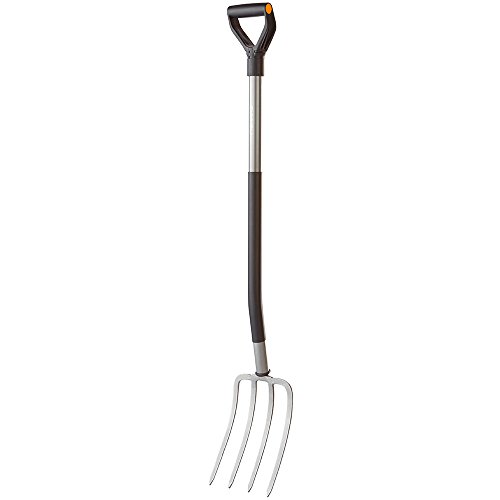
The Fiskars is the heavy lifter of this guide. The head is welded boron steel with long, pointed tines made to bite into hard and dense soil, and the shaft is steel as well, so there is no wooden handle to snap when you lever against a buried stone. At 47 inches overall it is the longest fork here, and the extra length adds pry power on deep-rooted weeds and compacted beds.
The grip is the other half of the design. The D-handle is angled so the wrist stays in a neutral position, and the teardrop shaft has a mid grip, giving a second hand position for lifting loose material. It is not a light tool, and the all-steel build is the reason. Fiskars backs it with a lifetime warranty.
Specs
- Tines: 4, boron steel, pointed
- Head: welded boron steel
- Shaft: steel, teardrop profile with mid grip
- Handle: angled D-handle
- Overall length: 47 in
- Weight: 4.72 lb
- Warranty: lifetime
- Model: 333400-1001
Who it’s for / who should skip
Who it’s for: gardeners with hard, stony or compacted ground who want one strong fork for digging, loosening and lifting. Who should skip: anyone who mainly works in borders and raised beds at close quarters, where the 47-inch all-steel build is heavier and longer than the job needs.
2. Truper 30293 Tru Tough Spading Fork

The Truper 30293 is the classic American spading fork format: a four-tine gray steel head with a clear coat, diamond-point tines, and a 30-inch North American ash handle finished with a steel D-grip. The short handle keeps digging close to the body, which is what you want when turning a raised bed, working a border or aerating soil around established plants.
Ash is a deliberate choice here rather than a cost saving. The wood flexes slightly under load and absorbs the shock that runs up a rigid shaft when a tine hits a stone, and the D-grip gives a secure hold with gloves on. The head is 7 inches wide and the whole tool is light enough to use all morning. The trade-offs are reach and exposure: the short handle means more bending on open ground, and a clear-coated steel head needs a wipe-down after wet work. Truper backs the fork with a 10-year replacement warranty.
Specs
- Tines: 4, diamond-point steel
- Head: steel with clear coat
- Handle: 30 in North American ash, steel D-grip
- Overall length: 40 in
- Head width: 7 in
- Weight: 3.7 lb
- Warranty: 10-year replacement
- Model: 30293
Who it’s for / who should skip
Who it’s for: bed and border gardeners who want a light, controlled fork for turning, loosening, aerating and transplanting, and anyone who prefers the feel of a wood handle. Who should skip: taller gardeners digging open ground all day, who will feel the short handle in their back, and anyone who leaves tools outdoors, where the coated steel head will rust.
3. True Temper 2812200 Forged Spading Fork
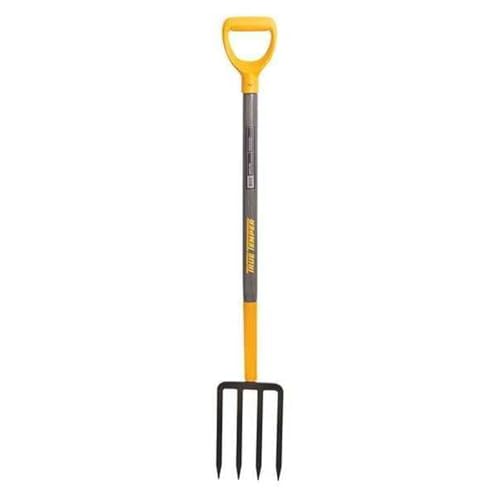
True Temper’s 2812200 follows the same classic pattern as the Truper but with a forged head and a hardwood handle paired with a poly D-grip. The forged construction matters at the tine shoulders, the point where cheaper forks bend or snap when a load is levered sideways; a forged head is formed from a single piece of steel, so the tines and socket share one grain. The four tines are diamond-pointed for penetration.
The poly D-grip is the practical difference from an all-wood handle: it will not weather, swell or split at the grip, and it gives consistent leverage in wet conditions. The 30-inch handle keeps the same close, controlled working position as the other short forks in this guide, and the tool is made in the USA. Reach is the limit; this is a bed tool, not a field tool.
Specs
- Tines: 4, diamond-point steel
- Head: forged steel
- Handle: 30 in hardwood, poly D-grip
- Weight: 3.9 lb
- Origin: made in the USA
- Model: 2812200
Who it’s for / who should skip
Who it’s for: gardeners who want a forged-head spading fork in the traditional short format, and anyone who has split a wooden D-grip before and wants the poly grip instead. Who should skip: anyone digging large open plots, who needs a longer handle, and compost movers, who need more and slimmer tines than a four-tine spading head offers.
4. Spear & Jackson 4550DF Traditional Digging Fork

The 4550DF is the traditional English digging fork: a stainless steel head on a hardwood handle, sized between the short D-handle forks and the long Fiskars at just under 40 inches. Stainless is the point of this pick. It slides through soil with less friction than coated carbon steel, sheds wet clay more easily, and does not rust when a fork is put away damp.
The four stainless tines cover the standard digging-fork work: breaking up soil, aerating, turning compost and general cultivation. At 4.29 pounds it carries a little more weight than the short forks, which helps the head drive into firm ground but is noticeable over a long session. The Traditional range is built to a heritage pattern rather than an ergonomic one, so there is no angled grip here; what you get is a simple, corrosion-resistant fork built to last.
Specs
- Tines: 4, stainless steel
- Head: stainless steel
- Handle: hardwood
- Overall length: 39.76 in
- Weight: 4.29 lb
- Model: 4550DF
Who it’s for / who should skip
Who it’s for: gardeners in wet climates or with heavy, clinging soil who want a rust-proof digging fork in a mid-length traditional format. Who should skip: anyone who needs maximum pry strength for stony ground, where a forged carbon steel head is the safer choice.
5. Truper 30317 Tru Pro Manure Fork

The 30317 changes jobs entirely. Six tines on a one-piece forged head, carried on a long premium North American ash handle, make a fork built to move material rather than dig it: compost, manure, straw, hay and mulch all sit across six tines far more securely than across four, and the long handle lets you pitch loads into a barrow without walking every forkful over to it. Truper’s Tru Pro line is its contractor-grade series, and this fork is listed for commercial and agricultural use as well as garden compost work.
That specialisation cuts both ways. Six slimmer tines are the wrong tool for breaking unworked ground, and this fork will disappoint anyone who buys it as a digging fork. One caution on the listing itself: its published figures for handle length conflict between sources, so that measurement is marked not stated below; the tine count, forged head and ash handle are consistent across the listing.
Specs
- Tines: 6
- Head: one-piece forged steel
- Handle: premium North American ash, long handle
- Handle length: not stated
- Weight: 4.55 lb
- Model: 30317 (BPJ-6E)
Who it’s for / who should skip
Who it’s for: gardeners with compost piles, livestock bedding or large mulch jobs to move, and anyone who turns a big heap regularly. Who should skip: anyone whose main work is digging and turning soil.
Frequently Asked Questions
What is the difference between a digging fork and a spading fork?
Very little in practice, and the names are often used for the same tool: a four-tine fork with flat or diamond-point tines for digging, turning and lifting soil. Digging fork is the common British term and spading fork the common American one. Both differ from a manure or pitch fork, which has more, slimmer tines for moving loose material rather than breaking ground.
Can a garden fork replace a spade?
For much bed work, yes. A fork penetrates compacted or stony soil more easily than a spade, loosens a larger volume per stroke, and lifts root crops with less damage. A spade still wins for edging, cutting a clean trench and slicing through turf, so most gardeners keep both.
How do I stop tines bending or snapping?
Work the fork as a lever in stages: drive the tines in with your foot, then pull the handle back a short distance at a time rather than prying a full load in one movement, and never twist the head sideways against a buried stone. If a tine meets rock, back out and work around it.
How should a garden fork be stored and maintained?
Knock the soil off after use and store the fork dry and under cover. Wood handles last longest with an occasional coat of linseed oil, and a carbon steel head benefits from a wipe with an oily rag before winter storage. Stainless heads need the least care.
Final verdict
Match the fork to the material you move most. For everyday bed work, the Truper 30293 and the True Temper 2812200 are near-interchangeable classics. Choose the Fiskars when the ground itself is the problem and you need length and an all-steel build behind each stroke. Choose the Spear & Jackson 4550DF if rust and wet soil are your recurring enemies. And if your fork work is mostly compost and manure rather than soil, skip the digging forks entirely and take the six-tine Truper 30317.
Product and ASIN Reference
| Product | ASIN |
|---|---|
| Fiskars Ergo D-handle Steel Garden Fork (47 Inch) | B00EQ053G6 |
| Truper 30293 Tru Tough Spading Fork, 4-Tine, 30-Inch Ash D-Handle | B004T34A9G |
| True Temper 2812200 Forged Spading Fork with Hardwood Handle | B00U2KG37M |
| Spear & Jackson 4550DF Traditional Stainless Steel Digging Fork | B0006UF6DA |
| Truper 30317 Tru Pro 6-Tine Manure Fork, Ash Handle | B002Q7L0V8 |
FAQ
What is the difference between a digging fork and a spading fork?
Can a garden fork replace a spade?
How do I stop tines bending or snapping?
How should a garden fork be stored and maintained?
More from Amazon
Programs that pair well with the guide above. Offers and eligibility are set by Amazon and may change.
Free shipping on eligible items, Prime Video and more. Eligible new members can start with a free trial.
Start a Prime free trialAudiobooks and podcasts to listen to on the go. Eligible new members can start with a free trial.
Try Audible freeAd-free music streaming. Eligible new subscribers can start with a free trial.
Try Music Unlimited freeA free business account with business pricing and bulk-buying tools for work, shop or home office.
Create a business accountAs an Amazon Associate we earn from qualifying purchases.
Write Your Review
No reviews yet. Be the first to share your experience!