
Key takeaways
- Plastic ice scrapers vs brass ice scrapers: compare edge hardness, glass scratch risk, thick-ice power and blade wear to choose the right blade material.
Choosing between a plastic and a brass ice scraper is really a choice about what edge meets your windshield every winter morning. A molded plastic blade flexes, rounds over with use, and can turn brittle in deep cold, but it anchors the long brush-and-scraper combos most drivers rely on. A brass blade stays thin and sharp season after season, yet it only comes on short hand tools built for frost and bonded ice. Neither material wins everywhere; the right answer depends on your ice, your glass, and how often you replace tools.
This comparison is for three kinds of drivers: commuters who clear light frost most mornings, drivers who face freezing rain and thick ice, and anyone tired of replacing plastic scrapers yearly. The four tools below were selected from their Amazon product names and listed specifications: two plastic-blade models, including a long detachable brush combo, and two brass-blade models, one shaped to follow curved glass. Each entry states blade material and dimensions as listed.
Quick Picks
As an Amazon Associate we earn from qualifying purchases.
| Product | Best for | Key spec from title |
|---|---|---|
| AstroAI 27″ Snow Brush and Ice Scraper, 2 Pack | Plastic pick for snow plus ice on cars and SUVs | 27-inch detachable scraper, heavy-duty ABS blade, PVC brush |
| Hopkins SubZero Ice Crusher | Plastic pick for thick ice and tall windshields | Extendable handle, flexible blade, built-in squeegee |
| The Better Ice Scraper, Pack of 2 | Brass pick for daily frost on curved glass | 1/4 hard brass edge, shape-shifting frost blade |
| Murska Brass Blade Ice Scraper A054 | Brass pick for compact glovebox storage | Brass blade 3.5 in wide, 6.5 in overall, made in Finland |
How to Choose
Edge hardness decides the scratch question
Every brass listing in this comparison makes the same material argument: brass sits between ice and glass in hardness. The Better Ice Scraper describes its 1/4 hard brass alloy as harder than ice yet softer than glass, and Murska states plainly that brass is softer than glass, so there is no danger to car windows. Plastic is softer still, which sounds safer, but the sharpest warning on either page is about grit, not blades: The Better Ice Scraper cautions against using any scraper when sand is present, because sand is harder than glass and can cause scratches regardless of blade material.
Thick ice and frost are different jobs
Frost is a thin film that rewards a thin, keen edge, which is where brass earns its keep: a narrow metal edge slides under the film and lifts it in full-width passes. Thick ice from freezing rain is a chiseling job, and that is where plastic tools fight back with geometry. The Hopkins Ice Crusher pairs its flexible blade with an extendable handle for leverage and reach, while The Better Ice Scraper adds a separate toothed ice edge for chipping before its brass frost edge clears. Match the tool to the deposit you actually get, not the worst storm you can imagine.
Blade wear and cold brittleness separate the materials
A plastic edge is molded, not sharpened, so every season of scraping rounds it over a little more, and hard impacts can chip chunks out of it. Deep cold makes that worse, since plastic stiffens and turns brittle just when ice is hardest. Brass wears differently. The Better Ice Scraper’s listing states that brass maintains a finely honed edge far longer than plastic, and Murska builds its scraper from cold-resistant materials its listing rates for temperatures down to -40°C. If you keep tools for years, edge retention is the strongest argument for brass; if you lose scrapers regularly, it barely matters.
Reach, handles, and what you can replace
Blade material also decides the shape of the tool. Brass blades appear on short hand scrapers like the 6.5-inch Murska, which lives in a glovebox or door pocket and offers no reach beyond your arm. Plastic dominates long formats: the AstroAI stretches to 27 inches with a brush on the other end, and its scraper head detaches for tight work. Neither material offers a replaceable blade on these listings, so a worn edge means a new tool either way. Decide first whether you need reach for a tall windshield or a compact tool that is always within arm’s length.
The 4 Best Options
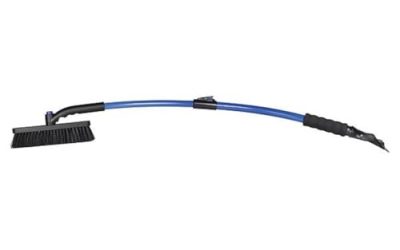
AstroAI 27″ Snow Brush and Ice Scraper, 2 Pack

This is the plastic side of the argument in its most useful form: a 27-inch tool that brushes snow first and scrapes second, sold as a pair so two cars or two doors are covered. The scraper head detaches from the handle, which helps in tight corners around mirrors, and the foam grip is easier on cold hands than a bare plastic shaft. As a pure frost tool it gives up edge quality to the brass pair below, but for households whose winter problem is snow volume as much as ice, it is the practical plastic benchmark here.
Specs
- Overall length: 27 inches
- Pack quantity: 2
- Scraper blade material: heavy-duty ABS plastic
- Brush bristles: PVC
- Scraper head: detachable
- Grip: ergonomic foam
- Model number: SN2P0Y (per listing details)
Best for: Households with two cars that need snow cleared before ice is even reached.
Watch out for: The ABS edge is a snow-first design; check the listing photos if your main problem is thin frost rather than snow.
ASIN: B07V26CHW8
Hopkins SubZero Ice Crusher

Hopkins builds its plastic case around leverage instead of edge finesse. The Ice Crusher extends its handle so you can put body weight behind the blade and reach the middle of a tall windshield, and the listing describes a flexible blade with a built-in squeegee and snow broom in the same tool. That flexibility helps the blade follow glass, though a flexing plastic edge will never bite like brass. Choose it when your winters deliver thick, stubborn ice on a vehicle you cannot reach across, and accept that the blade is a consumable part of the design.
Specs
- Handle: extendable
- Blade: flexible plastic blade (per listing description)
- Built-in squeegee: yes
- Snow broom head: yes
- Brand: Hopkins SubZero
Best for: Drivers of trucks and SUVs facing thick ice they must reach and lean into.
Watch out for: Confirm the collapsed and extended lengths on the listing against your vehicle’s windshield height before ordering.
ASIN: B000WPAFLW
The Better Ice Scraper, Pack of 2

The strongest brass design here attacks plastic’s two weaknesses at once: edge life and curved glass. Its frost blade is formed from 1/4 hard brass, which the listing describes as harder than ice and softer than glass, and a patented shape-shifting edge flexes to match windshield curvature so one pass clears a full swath instead of narrow stripes. A separate toothed ice edge handles chipping, so the brass edge is reserved for clearing. The compact body is shaped to be pushed from the base of the hand, reducing wrist strain, and the pack includes two.
Specs
- Blade material: 1/4 hard brass alloy
- Frost edge: patented shape-shifting design that conforms to glass curvature
- Second edge: toothed ice edge for chipping
- Dimensions: 5 x 4.25 x 3.5 inches
- Weight: 3.5 ounces
- Pack quantity: 2
- Model number: 47657
- Brand: Better Stuff LLC
Best for: Daily frost on curved windshields, and drivers with reduced grip strength.
Watch out for: The listing warns not to use it on painted surfaces and to avoid scraping when sand is on the glass.
ASIN: B07KMPD7RT
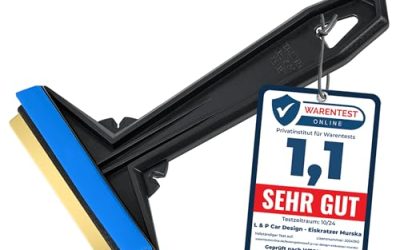
Murska Brass Blade Ice Scraper A054

Murska takes the traditional European approach: a simple, flat brass blade on a short cold-resistant handle, made in Finland for Arctic winters. The blade is 3.5 inches wide on a tool just 6.5 inches long, so it stores in a glove compartment or door tray and comes out for frost and moderate ice rather than snow clearing. The listing pairs the brass edge with a handle molded from HIPS, a high-impact polystyrene chosen for cold resistance, and states the scraper is built to withstand temperatures down to -40°C. It is the minimalist brass option: no brush, no extension, no moving parts.
Specs
- Blade material: brass
- Blade width: 3.5 inches (90 mm)
- Overall length: 6.5 inches (165 mm)
- Handle material: HIPS (high-impact polystyrene)
- Country of origin: Finland (per listing)
- Weight: 1.13 ounces
- Model: A054
Best for: Drivers who want one small brass scraper that lives in the car all winter.
Watch out for: The short handle gives no extra reach, so check it suits your windshield size and seating position.
ASIN: B00GNXWRVI
Which One Fits Your Situation
Frost on the windshield most mornings
Choose brass. A thin metal edge lifts frost film in fewer passes than a molded plastic edge, and it keeps doing so after seasons of use. The Better Ice Scraper suits curved modern windshields best, because its frost edge is designed to conform to the glass; the Murska works if you prefer the simplest possible tool and your windshield is flatter.
Thick ice after freezing rain
Choose based on reach. If the ice bonds to a tall windshield, the Hopkins Ice Crusher’s extendable handle and flexible blade give you leverage a hand tool cannot. On a sedan you can reach across, The Better Ice Scraper’s toothed ice edge chips first and its brass edge clears behind it, which handles bonded ice without a long tool.
An older windshield with fine scratches already
Choose brass, and clean technique. Both brass listings state their blades are softer than glass, so the edge itself is not the scratch risk; trapped sand and grit are. Wipe or rinse loose grit away before scraping, work in straight passes, and either brass model here will clear frost without adding the dragged-grit damage a rushed plastic scrape can cause.
A shared car, a teen driver, or a spare for guests
Choose the plastic 2-pack. The AstroAI pair lets you keep a full brush-and-scraper in two vehicles, and if one is lost, lent out, or left at someone else’s house, the household still has coverage. Brass rewards an owner who keeps the same tool for years; shared cars reward cheap redundancy instead.
Common Mistakes
- Scraping a sandy or gritty windshield, which drags particles harder than glass across the surface no matter which blade material you use.
- Using a brass scraper on painted panels or trim; The Better Ice Scraper’s listing explicitly warns against painted surfaces.
- Buying a long brush combo for a frost-only problem, then fighting a thick molded edge against thin ice film every morning.
- Judging a plastic scraper by blade thickness alone, when edge shape and added ice teeth matter more on thick deposits.
- Treating a rounded, chipped plastic edge as permanent; once the edge is gone, the tool is done and needs replacing.
Frequently Asked Questions
Does a brass ice scraper scratch windshield glass?
According to the brass listings themselves, no. The Better Ice Scraper states its 1/4 hard brass is softer than glass, and Murska says the same of its blade, which is why both are marketed for car windows. The realistic scratch risk is trapped sand or grit, which is harder than glass and can mark it under any blade, so clear loose grit first.
Which material clears thick ice faster, plastic or brass?
It depends on the tool around the blade. Brass holds a thinner edge, which bites under bonded ice and frost better than a molded plastic edge. Plastic counters with leverage and teeth: extendable handles like the Hopkins Ice Crusher and toothed chipping edges break up thick deposits. For repeated thick-ice storms, prioritize chipping geometry and reach over blade material alone.
How long does each type of blade last?
The listings do not promise a service life in years, but they are explicit about wear. The Better Ice Scraper states brass maintains a finely honed edge far longer than plastic, while plastic edges gradually round over and can chip in hard use or deep cold. In practice, brass is the keep-for-years choice and plastic is the replace-as-needed choice.
Can I use a brass scraper on side windows and mirrors?
The brass listings aim their blades at car windows generally, and the softer-than-glass argument applies to side glass as well as windshields. Keep brass off painted surfaces, following The Better Ice Scraper’s explicit warning, and be careful around mirror housings and trim, where a plastic tool or a gloved hand is the safer instrument.
FAQ
Does a brass ice scraper scratch windshield glass?
Which material clears thick ice faster, plastic or brass?
How long does each type of blade last?
Can I use a brass scraper on side windows and mirrors?
More from Amazon
Programs that pair well with the guide above. Offers and eligibility are set by Amazon and may change.
Free shipping on eligible items, Prime Video and more. Eligible new members can start with a free trial.
Start a Prime free trialAudiobooks and podcasts to listen to on the go. Eligible new members can start with a free trial.
Try Audible freeAd-free music streaming. Eligible new subscribers can start with a free trial.
Try Music Unlimited freeA free business account with business pricing and bulk-buying tools for work, shop or home office.
Create a business accountAs an Amazon Associate we earn from qualifying purchases.
Write Your Review
No reviews yet. Be the first to share your experience!