
Key takeaways
- Compare five static climbing ropes for rappelling, rescue work and fixed lines, with diameters, breaking strengths, lengths and care tips for descents.
A climbing rope is life-safety equipment, and the first decision is not brand or color but rope type. Dynamic ropes stretch to absorb the energy of a fall, which makes them the only correct choice for lead climbing and belayed climbing where a fall is possible. Static ropes barely stretch, which makes them the right tool for rappelling, ascending fixed lines, hauling loads, caving, and rescue work, where bounce works against control. This guide explains how to choose between the two families, then compares five static ropes sold on Amazon for descent, rigging, and rope-access style tasks.
Every rope below is a static model, because static ropes are where Amazon’s listings are deepest and specifications can be checked against the seller’s own listing data. If your climbing involves leader falls, none of these ropes replaces a certified dynamic rope built to the EN 892 standard; the buying guide below explains the difference so you can match the rope to the job.
As an Amazon Associate, we earn from qualifying purchases.
How to Choose a Climbing Rope
Start with rope type. A dynamic rope is engineered to elongate under a falling load, spreading the force of a fall over a longer distance and lowering the peak impact on the climber, the belayer, and the anchor. That stretch is a safety feature for lead climbing, but it is a liability for rappelling or hauling, where a springy rope makes positioning imprecise and wastes effort on every pull. A static rope, built to the low-stretch kernmantle pattern covered by the EN 1891 standard, typically elongates only a few percent under load, so descents stay controlled and loads stay where you put them. Never lead climb on a static rope: a fall onto a low-stretch rope produces severe impact forces.
Check the certification, not just the strength number. A breaking-strength figure in kilonewtons describes a straight pull to failure in a lab; it says nothing by itself about behavior in a fall, over an edge, or after seasons of abrasion. Look for ropes whose listings reference recognized standards such as EN 1891 for low-stretch kernmantle ropes or UIAA safety labels, and treat any rope that cites no standard at all as utility gear rather than life-safety gear.
Match diameter to your devices and gloves. Ropes around 10 to 11 mm run smoothly through most rappel devices, ascenders, and rope grabs, handle well in gloves, and offer a reassuring grip. Thicker ropes near 12.7 mm add abrasion margin and are easier to hold under load, but they are heavier and may not fit compact devices. Slimmer cords around 8.5 mm pack small and suit light-duty rigging, but they demand compatible hardware and careful edge protection.
Buy length for the descent, not the climb. For rappelling, the rope must reach the ground or the next anchor with length to spare for knots at both ends. A 60 m rope covers most single-pitch rappels and training towers; shorter 10 to 30 m lengths suit gym rigging, tree work at modest heights, and emergency kits. Longer options exist for rescue and industrial access, but every extra meter adds pack weight.
Plan for inspection and retirement. Inspect any rope along its full length before use: run it through your hands feeling for flat spots, soft or crunchy sections, and sheath damage, and check the ends for fraying. Retire a rope after a severe fall, after contact with acids or solvents, when the core shows through the sheath, or when its history is unknown. A simple rope log noting purchase date and uses removes guesswork from retirement decisions.
X XBEN Outdoor Climbing Rope

The X XBEN Outdoor Climbing Rope is the most versatile static option in this roundup, built around a 10.5 mm double-braid construction with a 16-strand polyester cover over a nylon core. The listing rates it at a maximum tensile force of 25 kN with a maximum bearing figure of 2,000 kg, and the polyester sheath is woven on a 48-carrier machine, which the maker credits for its abrasion resistance and low sheath slippage. Length options run from short 10 m cuts up to very long rescue lengths, covering a gym rigging line, a rappel rope, or a fixed line for caving and tree work.
Specs
- Type: Static
- Diameter: 10.5 mm
- Construction: Double braid, 16-strand polyester cover over nylon core
- Maximum tensile force: 25 kN
- Maximum bearing: 2,000 kg
- Weight: 75 g per meter
- Maximum elongation: 4 percent
- Lengths: 10 m, 20 m, 30 m, 50 m, 70 m, 152 m, and 352 m options
- Included: Two steel buckles and a carry bag, per the listing
Who it’s for / who should skip: This rope suits climbers and riggers who want one static line for rappelling, fixed-line ascending, hauling, and rescue practice, with a diameter that fits common descenders and ascenders. Skip it if you need a rope for lead climbing or any situation where a dynamic fall is possible, and confirm the current listing’s certification details before relying on it for professional rope access.
VEVOR 12.7mm Static Climbing Rope
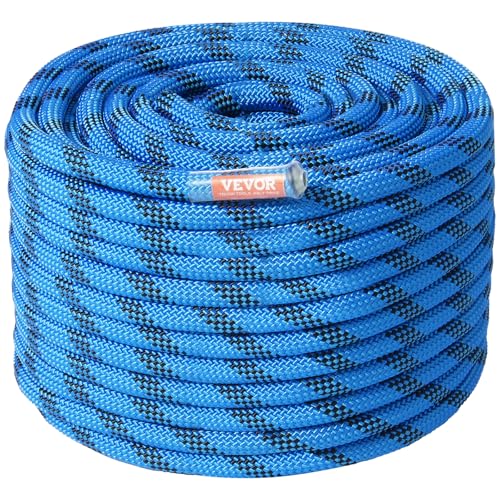
The VEVOR 12.7mm Static Climbing Rope is the heavy-duty pick of the group, a thick half-inch line aimed at escape, rappelling, and fire-rescue style use. The listing for model NTE-200-12.7 rates it at 30 kN breaking tension with a maximum elongation of 4 percent, keeping descents bounce-free under load. The braided polyester build resists moisture and ultraviolet exposure, and hot-melt cut ends help prevent fraying. At 60.9 m, the longest standard configuration covers tall rappels and training structures without a second rope.
Specs
- Type: Static
- Diameter: 12.7 mm
- Length: 60.9 m (200 ft) for model NTE-200-12.7; shorter options in the same line
- Material: Polyester
- Breaking tension: 30 kN
- Maximum elongation: 4 percent
- Weight: 6.7 kg at 200 ft
- Model number: NTE-200-12.7
- Standard referenced: ASTM F2116, per the product manual
Who it’s for / who should skip: Choose this rope for controlled rappelling, rescue lowering, and escape systems where a thick, easy-gripping line and a long single length matter more than pack weight. Skip it if your descender or ascender is not rated for a 12.7 mm rope, if you count grams on long approaches, or if you need a dynamic rope for belayed climbing.
AOLEBA 10.5 mm Static Climbing Rope

The AOLEBA 10.5 mm Static Climbing Rope pairs a standard all-round diameter with hardware-ready terminations: both ends are sewn with stainless steel protection thimbles and fitted with carabiner hooks, which speeds up anchor building. The listing rates the high-tenacity nylon rope at a maximum tensile force of 23 kN with a maximum bearing of 1,900 kg, and cites CE certification referencing EN 892:2012+A2:2021 under certificate number WUX202310235416SC. Lengths from 10 m to 70 m cover everything from a short escape line to a full-length rappel rope, and a drawstring rope bag is included.
Specs
- Type: Static
- Diameter: 10.5 mm
- Material: Nylon
- Maximum tensile force: 23 kN
- Maximum bearing: 1,900 kg
- Lengths: 10 m, 20 m, 30 m, 50 m, and 70 m options
- Terminations: Sewn ends with stainless steel thimbles and two carabiner hooks
- Certification: Listing cites CE certification to EN 892:2012+A2:2021, certificate WUX202310235416SC
- Included: Drawstring rope bag
Who it’s for / who should skip: This rope fits users who want a ready-to-rig static line for mountaineering support, tree climbing, rappelling, and emergency escape kits, without tying their own terminations. Skip it if you prefer to inspect and tie your own knots rather than rely on sewn terminations, and skip it for any lead-climbing use, as the listing itself flags it as a static rope without the shock absorption of a dynamic design.
NewDoar 18KN Static Climbing Rope 10mm

The NewDoar 18KN Static Climbing Rope trims the diameter to 10 mm for a lighter, more packable line while keeping a polyester build and an 18 kN breaking-strength rating. The listing gives a maximum load figure of 1,836 kg and offers four lengths from 10 m to 50 m, each supplied with two carabiners for quick anchor connections. The slimmer profile runs well through compact rappel devices and takes up less room in a rescue kit than the thicker ropes in this guide.
Specs
- Type: Static
- Diameter: 10 mm
- Material: Polyester
- Breaking strength: 18 kN
- Maximum load: 1,836 kg, per the listing
- Lengths: 33 ft (10 m), 66 ft (20 m), 98 ft (30 m), and 165 ft (50 m) options
- Included: Two carabiners
Who it’s for / who should skip: Pick this rope for rappelling, ice-climbing support lines, fire-rescue kits, and general rigging where a 10 mm line balances grip, weight, and device compatibility. Skip it if your system demands the higher strength margins of the 23 to 30 kN ropes above, if you regularly rig over sharp edges where a thicker sheath offers more sacrificial material, or if you need a dynamic rope for catching falls.
AOLEBA 8.5mm Static Climbing Rope

The AOLEBA 8.5mm Static Climbing Rope is the lightweight outlier of the group, a slim polyester line sold for outdoor rock climbing support, heavy-duty rappelling, fire rescue, and escape use. At 8.5 mm it packs noticeably smaller than the 10.5 mm ropes above, making it a sensible secondary line: a tag line, a light rigging cord for modest heights, or a compact emergency rope. Lengths run to 30 m, and orange and black color options appear in the listing.
Specs
- Type: Static
- Diameter: 8.5 mm
- Material: Polyester
- Lengths: 10 m (32 ft), 20 m (64 ft), and 30 m (96 ft) options
- Tensile strength: not stated
- Colors: Orange and black, per the listing
Who it’s for / who should skip: This rope suits users building a light secondary line for short rappels, rigging practice, and emergency kits where pack size matters more than maximum strength. Skip it as a primary life-safety rope for tall descents, since the listing does not state a tensile rating, and skip it if your descenders and ascenders are not rated for ropes this thin.
Frequently Asked Questions
What is the difference between dynamic and static climbing ropes?
Dynamic ropes are built to stretch substantially under a falling load, absorbing energy so the peak force on the climber and anchor stays survivable; they are required for lead climbing. Static ropes stretch only a few percent, which makes them efficient for rappelling, ascending fixed lines, hauling, and rescue lowering, but dangerous for catching leader falls.
Can a static rope be used for lead climbing?
No. A fall onto a low-stretch static rope generates far higher impact forces than the same fall on a dynamic rope, which can injure the climber and overload anchors. Static ropes in this guide are for descents, fixed lines, and load handling only; belayed climbing where falls are possible requires a dynamic rope certified to EN 892.
What diameter and length should I choose?
For a general-purpose static line, 10 to 11 mm fits most rappel devices and ascenders and handles well in gloves. Choose a length that reaches from your anchor to the ground or next station with spare rope for end knots; 60 m covers most single-pitch rappels, while 10 to 30 m lengths suit rigging, training, and emergency kits.
How do I inspect a climbing rope and know when to retire it?
Before each use, pull the full length through your hands and feel for flat spots, stiffness changes, or sheath damage; check sewn terminations and thimbles. Retire the rope after a severe fall or shock load, after chemical contact, when the core is visible, or whenever its usage history is unknown.
Final Verdict
For most buyers, the X XBEN Outdoor Climbing Rope is the strongest all-round static pick here: a standard 10.5 mm diameter, a 25 kN tensile rating, and the widest length range in the group. The VEVOR 12.7mm is the choice when maximum grip and a long 60.9 m line matter for rescue and escape work, while the AOLEBA 10.5 mm adds sewn thimble terminations for fast rigging. The NewDoar 10 mm trims weight for compact kits, and the AOLEBA 8.5mm works best as a light secondary line. Whichever you choose, match the rope to the task, confirm the certification details on the live listing, and never use a static rope where a dynamic fall is possible.
Product and ASIN Reference
| Product | ASIN |
|---|---|
| X XBEN Outdoor Climbing Rope | B01HOQSGYO |
| VEVOR 12.7mm Static Climbing Rope | B0DDBWY34W |
| AOLEBA 10.5 mm Static Climbing Rope | B0924PK159 |
| NewDoar 18KN Static Climbing Rope 10mm | B0B1TPFTQ2 |
| AOLEBA 8.5mm Static Climbing Rope | B0F532DVTY |
More from Amazon
Programs that pair well with the guide above. Offers and eligibility are set by Amazon and may change.
Free shipping on eligible items, Prime Video and more. Eligible new members can start with a free trial.
Start a Prime free trialAudiobooks and podcasts to listen to on the go. Eligible new members can start with a free trial.
Try Audible freeAd-free music streaming. Eligible new subscribers can start with a free trial.
Try Music Unlimited freeA free business account with business pricing and bulk-buying tools for work, shop or home office.
Create a business accountAs an Amazon Associate we earn from qualifying purchases.


Write Your Review
No reviews yet. Be the first to share your experience!