
Key takeaways
- Compare ski wax kits with irons, scrapers, brushes and universal wax for home tuning, and see which complete set fits your skis or snowboard best.
A dry, graying base is slow base. Skis and snowboards glide on a thin film of meltwater, and a base saturated with the right wax sheds that water instead of dragging against it. Waxing at home is one of the cheapest performance habits in the sport, and a complete kit puts the iron, wax, scraper and brushes in one bag so there is no excuse to skip it before a trip.
The five kits below cover the realistic range for home tuning, from a wax-heavy set built around a big block and base cleaner to a premium bundle with a proper edge tool. Every one includes an iron and glide wax; they differ in brush selection, edge tools, wax quantity and how much repair work they let you do.
As an Amazon Associate, we earn from qualifying purchases.
Quick answer
For most home tuners, a mid-range complete kit with an adjustable iron, universal wax, a plastic scraper and at least a nylon brush covers every routine job. Pick the RaceWax Elite if you also want serious edge tools, the XCMAN Complete for the fullest brush set, and a wax-heavy Demon or Winterial kit if you tune several boards and skis.
How to choose
A complete kit should contain a waxing iron, at least one block of glide wax, a plastic scraper for removing cooled wax, brushes for working the base structure back open, and a carry case. Nylon brushes handle everyday finishing, horsehair brushes polish finer waxes, and a brass brush is for deep cleaning before a fresh wax. Base cleaner or fiberlene sheets strip old, dirty wax; P-Tex sticks and an edge tuner push a kit from simple waxing into light repair.
Wax type matters more than kit size. Universal-temperature wax is the sensible default for home use: one block that behaves acceptably from cold midwinter days to spring slush. Temperature-specific waxes, sold in cold, mid and warm ranges, glide better inside their window and worse outside it, so they suit racers and skiers who ride one consistent climate. Rub-on and liquid waxes form a separate quick class: they go on in minutes with no iron, but the layer is thin and usually fades within a day of riding, so treat them as a top-up between proper hot waxes, not a replacement.
The iron deserves scrutiny. A real waxing iron holds a low, steady temperature with a thick plate, so wax melts and flows without smoking. A clothes iron runs hotter, cycles unevenly and can scorch a base, so it is not a substitute. Finally, size: snowboard bases are wider, so board owners use more wax per session and benefit from a wider scraper.
RaceWax Elite Ski and Snowboard Tuning and Waxing Kit

The RaceWax Elite is the most complete tuning package in this group, built around a temperature-adjustable 1000 W iron with a thick, dimpled plate that holds heat evenly across the base. The wax is a 120 g block of universal-temperature glide wax made by Toko, a hydrocarbon formula meant to cover the broad middle of winter conditions rather than one narrow temperature band.
What lifts this kit above basic wax sets is the edge hardware. It includes a Swix base-side edge tool with a Swiss-made ICECUT file that dials in side angles from 0 to 5 degrees and base angles of 0.5 or 1.0 degree, plus a gummi stone for removing rust and burrs, a 5 mm plexi scraper, P-Tex sticks for filling shallow gouges and a Cordura travel bag.
The honest trade-off is that this is a tuner’s kit, not a minimalist wax box. First-time waxers may find the edge tool more than they need, and the universal wax follows the usual rule: one home hot wax lasts a few days of skiing, not a season, so the 120 g block is a supply to be renewed, not a lifetime stock. Keep the iron moving and never let the wax smoke; a smoking iron is set too hot, damages glide, and fills the room with fumes worth ventilating.
XCMAN Complete Ski Snowboard Tuning and Waxing Kit

The XCMAN Complete, model STK-3, is the brush lover’s kit. Alongside an 800 W waxing iron and a 100 g block of universal training wax, it packs three brushes: nylon for everyday finishing, horsehair for finer polishing, and brass for cleaning and opening the base structure before waxing. That trio is the full sequence most home tuners eventually buy separately, and here it arrives in one tool bag.
The rest of the contents cover routine repair: a plastic scraper with a corner notch for cleaning edges, a metal scraper, an edge tuner, and PTEX for drip repairs on shallow base damage. The wax is a general training formula rather than a temperature-specific race wax, which is the right call for a kit aimed at families and recreational riders maintaining several pairs of skis and boards.
Expect to scrape thoroughly. The point of a hot wax is the thin layer worked into the base structure, and the brushes in this kit exist to clear the excess and reopen the texture afterward; a thick residue left unscraped drags on snow and feels slower than no wax at all. Like every kit here, the wax is a modern non-fluorinated formula: fluorinated race waxes have been phased out of competition and have largely left retail shelves, so current kits are hydrocarbon based by design.
Demon Complete Ski Tune Kit with Wax and Brush Kit
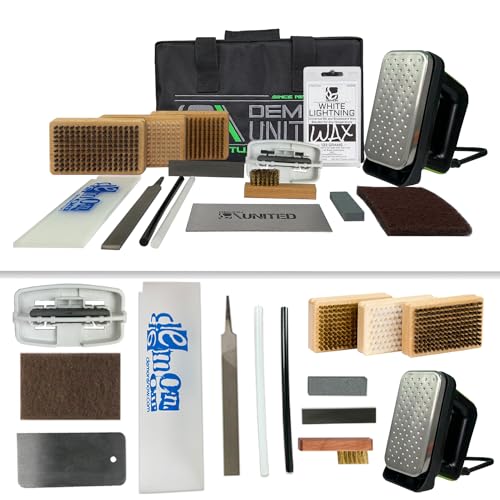
Demon’s Complete kit, part DS7700.10, is a well-rounded middle option that pairs an adjustable-temperature iron with a universal blend wax made in the USA and formulated without fluorocarbons. The tool roll covers the full basic tune: a flat file, an edge tuner, a wax scraper, a tuning stone, wire brushes, a polishing pad and a P-Tex candle for minor base repairs, all packed in a carry case.
The brush kit is the reason to pick this version over Demon’s smaller Basic kit. Brushing after scraping is the step beginners skip, and it is the step that restores the fine structure that channels meltwater away from the base. With the brushes included, nothing in the standard clean, wax, scrape and brush routine is missing.
Two realities apply. First, the iron is a home-grade unit: give it a few minutes to settle at temperature and keep it moving in slow passes, because parking a hot iron in one spot can damage a base. Second, the universal wax is a compromise by design, happiest in mid-range temperatures; on bitter January mornings or wet April afternoons a temperature-specific block will glide better, and this kit’s tools will happily apply one bought separately.
Winterial Snowboard and Ski Tuning Kit

The Winterial kit, model WIN-STK, leads with wax quantity: it ships with 40 oz of all-temperature wax, several times the amount in most kits, which suits households tuning multiple boards and skis through a season. The iron is adjustable, and the supporting tools include a multi-angle edge tuner, a hardened file, both steel and plastic scrapers, black and clear PTEX rods, an abrasive pad and a tuning stone, plus a wax apron with storage pockets and a carry bag.
The apron is a small but practical touch, since hot wax drips and P-Tex work are messy, and the steel scraper earns its place for leveling repair material before the plastic scraper takes over on wax. With this much wax included, the per-session cost of staying on a regular waxing routine drops, which matters because frequency beats perfection: a fresh home wax every few days on snow outperforms one meticulous job left to wear away for weeks.
The limits are the usual ones. All-temperature wax is a jack of all conditions rather than a master of any, and the edge tuner is a maintenance tool for keeping edges keen between shop grinds, not a replacement for a full base grind when edges are badly worn.
Demon Hyper Speed Ski and Snowboard Tune Kit

The Hyper Speed kit, part ds7802, is built around two consumables the other kits treat as extras: a full 1 lb block of universal blend wax and a bottle of base cleaner. The cleaner matters more than it sounds. Bases pick up dirt, old oxidized wax and spring grime, and ironing fresh wax over a dirty base traps that contamination in place; a proper clean first gives the new wax a surface it can actually bond with.
An adjustable iron and the standard tune tools round out the bag, so the kit handles the same wax, scrape and edge routine as the others while supplying enough wax for a long run of sessions. The universal blend keeps the decision simple for mixed conditions and mixed ability levels in one household.
Keep expectations in line with the class. This is a maintenance kit, not race preparation: there is no temperature-specific wax set and no fluorinated topcoat, in line with where the sport has moved as fluoro waxes have been phased out of competition and largely off store shelves. Work in a ventilated space, set the iron so the wax melts and flows without smoking, and remember that a home hot wax is a few-days product. Reapplication is the routine, not a sign that something went wrong.
Who should skip a ski wax kit
Renters and once-a-season skiers should skip buying a kit; a shop wax before each trip costs less than gear that sits in a closet. Anyone whose skis need a base grind, edge repair beyond a burr, or a binding check should go to a shop first and wax at home afterward. Cross-country skiers with waxable classic skis need kick wax and grip-zone tools that these glide-focused kits do not cover, and riders who only ever want a two-minute fix should buy a rub-on wax instead of an iron they will not use.
Frequently Asked Questions
How often should I hot wax my skis or snowboard?
A practical rhythm is every three to five days on snow, or whenever the base looks dry, white or chalky along the edges. Spring snow and dirty man-made snow wear wax faster, so shorten the interval then.
Can I use a clothes iron instead of a waxing iron?
It is a poor substitute. Clothes irons run hotter, cycle unevenly and have holes and curves that spread wax badly, and overheating can scorch a base or burn the wax. A basic waxing iron holds the low, steady temperature the job needs.
Is universal wax good enough, or do I need temperature-specific wax?
For recreational skiing in varied conditions, universal wax is good enough and far simpler. Temperature-specific waxes glide better inside their stated range, so they reward racers and anyone who rides in consistently very cold or very warm snow.
Why does the wax smoke, and what should I do?
Smoke means the iron is too hot. Turn it down until the wax melts into a flowing puddle without smoking, keep the iron moving, and ventilate the room, since overheated wax fumes are worth avoiding.
Final verdict
Buy the kit that matches the work you will actually do. The XCMAN Complete is the best default for most households, with a full brush set and honest universal wax. The RaceWax Elite justifies itself if you will genuinely sharpen edges at home. The Winterial and Demon Hyper Speed kits suit high-volume tuners who burn through wax, while the Demon Complete sits in the middle with a tidy, case-ready tool set. Whichever you choose, wax little and often: frequency is what keeps a base fast.
Product and ASIN Reference
| Product name | ASIN |
|---|---|
| RaceWax Elite Ski and Snowboard Tuning and Waxing Kit (PC-7909) | B08KFQL19R |
| XCMAN Complete Ski Snowboard Tuning and Waxing Kit (STK-3) | B07JQ316Z3 |
| Demon Complete Ski Tune Kit with Wax and Brush Kit (DS7700.10) | B01M59DAJO |
| Winterial Snowboard and Ski Tuning Kit (WIN-STK) | B01N5JOE1D |
| Demon Hyper Speed Ski and Snowboard Tune Kit (ds7802) | B06X9DQ331 |
FAQ
How often should I hot wax my skis or snowboard?
Can I use a clothes iron instead of a waxing iron?
Is universal wax good enough, or do I need temperature-specific wax?
Why does the wax smoke, and what should I do?
More from Amazon
Programs that pair well with the guide above. Offers and eligibility are set by Amazon and may change.
Free shipping on eligible items, Prime Video and more. Eligible new members can start with a free trial.
Start a Prime free trialAudiobooks and podcasts to listen to on the go. Eligible new members can start with a free trial.
Try Audible freeAd-free music streaming. Eligible new subscribers can start with a free trial.
Try Music Unlimited freeA free business account with business pricing and bulk-buying tools for work, shop or home office.
Create a business accountAs an Amazon Associate we earn from qualifying purchases.


Write Your Review
No reviews yet. Be the first to share your experience!