
Key takeaways
- Find the best microspikes for winter hiking, with stainless and carbide spikes that bite into ice and secure harnesses for steep, frozen trails.
- Top Pick: Kahtoola MICROspikes Footwear Traction
- Runner-up: Hillsound Trail Crampon Ultra
- Also consider: Hillsound Trail Crampon Ultra
A winter trail can change character in a few hundred feet. Packed snow gives way to refrozen meltwater at a stream crossing, then to polished ice on a shaded switchback where the wind has stripped the surface clean. Regular hiking boots, even with deep lugs, skate on that kind of ground, and one slip on a slope can mean a twisted ankle miles from the trailhead. Slip-on traction is the simplest fix: spikes that stretch over your boots, stay put while you climb, and come off again when the trail softens.
This guide compares five sets of microspikes for winter hiking from trusted winter brands. The picks range from the classic chain-and-spike design to lighter carbide-stud models for mixed road and trail days, plus an aggressive plate design for steep routes. Each fits over ordinary hiking boots, packs small, and is sized by shoe size.
As an Amazon Associate, we earn from qualifying purchases.
Quick answer
For most winter hikers, the Kahtoola MICROspikes are the safest all-around choice, with 12 stainless spikes per foot on welded chains that bite hard on ice and packed snow. Choose the Hillsound Trail Crampon Ultra for steeper trails and trail shoes, the Kahtoola EXOspikes for mixed pavement and dirt, and the Hillsound Trail Crampon for the longest, most aggressive spikes on rigid boots.
How to choose
Microspikes, ice cleats, and crampons are different tools
Ice cleats are the lightest option: small studs or coils under a rubber frame, made for flat sidewalks and short walks on gentle ground. They add grip on level ice but offer little security on a slope, and the studs are short enough to skate on hard trail ice. Full crampons sit at the other extreme, with long, rigid points, a stiff frame that must pair with mountaineering boots, and front points for kicking steps into steep ice. They belong on glaciers and technical climbs, and they are heavy overkill for a maintained winter trail.
Microspikes fill the wide middle ground. A typical set puts 8 to 18 metal spikes under the forefoot and heel, linked by chains or set into a flexible plate, with an elastomer harness that stretches over the boot. That combination bites into trail ice, holds on packed snow, and still flexes enough for a natural stride.
Spike count, length, and material
More spikes spread your weight across more contact points, which helps on uneven ice. Longer spikes reach through loose snow to the hard layer beneath and dig deeper on steep descents, but they feel more pronounced on bare rock. Shorter carbide studs sit closer to the sole, feel smoother on mixed ice and bare ground, and resist wear on pavement far better than steel.
Stainless steel resists rust and holds an edge well. Carbon steel is often longer and very hard, though it benefits from drying after use. Tungsten carbide tips are the hardest option: they stay sharp on abrasive surfaces and suit routes with long paved or rocky stretches between icy sections.
Harness fit and sizing
The harness does as much work as the spikes. It should stretch easily over the bulkiest boot you plan to wear, sit high on the heel and toe so it cannot roll off, and stay flexible in deep cold. Some models add a strap across the top of the foot, worth having if you posthole through deep snow, descend steep trails, or wear low trail shoes, since soft uppers give the harness less to grip.
Always size by the footwear you will actually hike in. Insulated winter boots run much larger than trail runners, and many hikers need the next size up for boots. If you fall between sizes, the larger harness usually seats more securely. A set that is too small is hard to pull on with cold hands, while a loose set can shift on a descent.
Chains, plates, and packability
Chain-based designs flex in every direction and conform to rocky trails. Plate-based designs hold spikes on hinged plates; they feel more stable on steep ice, at the cost of extra weight and a stiffer stride. Hybrid models set carbide studs into a molded sole with no chains, making them the quietest and lightest to carry. Most pairs here weigh about 7 to 16 ounces and roll into a small sack for an outside pocket.
Kahtoola MICROspikes Footwear Traction

The Kahtoola MICROspikes are the reference design for this category, and they remain the pair to beat for general winter trail use. Twelve stainless steel spikes per foot, each about three eighths of an inch long, hang from welded stainless chains, positioned under both forefoot and heel so grip continues through the whole stride. The elastomer harness pulls on over hiking boots and insulated winter boots alike, and reinforced eyelets address the failure point that ends the life of cheaper copies.
On trail, the appeal is balance. The spikes hold on wind-polished ice and steep packed snow, yet the chains flex over rocks and roots. The harness stays flexible in deep cold, making trailside changes with gloves on manageable. Choose the MICROspikes for maintained winter trails, frozen crossings, and icy approaches. They suit mid and high hiking boots best.
Hillsound Trail Crampon Ultra
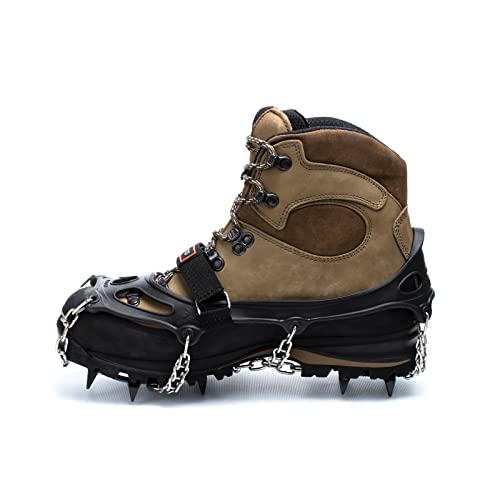
The Hillsound Trail Crampon Ultra tunes the microspike idea for movement. Eighteen stainless steel spikes per foot give it the densest layout in this guide, with three longer spikes at the heel that dig in when you brake on a descent. The spikes sit on a hinged plate system linked by chains, and a strap across the top of the foot locks the harness down, which matters on trail shoes where a plain elastomer band has less boot to hold.
That strap and flexible fit suit winter trail runners, fast hikers, and anyone in soft footwear. The plate hinges with the foot, so the stride feels natural, while the many contact points keep grip consistent across ice, frozen mud, and packed snow. At roughly 15 ounces a pair, it carries easily in a daypack pocket. Pick it if your routes are steep or your footwear is light.
Kahtoola EXOspikes Footwear Traction

The Kahtoola EXOspikes solve a different problem: the winter route that is only partly a trail. Twelve spikes per foot use tungsten carbide tips set into aluminum steps and molded lugs, built to grip ice, then keep working across bare rock, gravel, and pavement without the rapid wear that dulls steel spikes on hard surfaces. There are no chains. The studs sit in a thermoplastic sole that stretches over running shoes, light hikers, and boots, and the pair weighs only about 7 to 8 ounces in the middle sizes.
That low profile is comfortable for long mixed stretches where chain models feel clunky, and the EXOspikes are quiet on pavement. The tradeoff is spike length: the carbide tips are shorter than on the MICROspikes or Hillsound models, so on steep, hard ice they offer less bite, and in deep loose snow they cannot reach a firm layer as effectively. Choose them for shoulder-season hikes, icy roads to trailheads, and frozen park paths.
Hillsound Trail Crampon
Despite the name, the Hillsound Trail Crampon works like an extra-aggressive microspike rather than a technical crampon. Eleven carbon steel spikes per foot, each about two thirds of an inch long, are mounted on a hinged carbon steel plate system, giving it the longest spikes in this roundup. A strap across the forefoot keeps the plates seated, and the harness stretches over rigid hiking boots and bulky insulated boots.
Those long spikes earn their keep on steep icy trails, wind-scoured ridges, and spring routes where a soft surface hides hard ice beneath. The hinged front plate flexes as you climb, so the spikes stay planted on a slope. The cost is weight, around 16 ounces a pair, and a more deliberate feel on flat ground. Pick it if your hikes are steep, your boots are stiff, and lesser traction has felt marginal.
Black Diamond Access Spike Traction Device
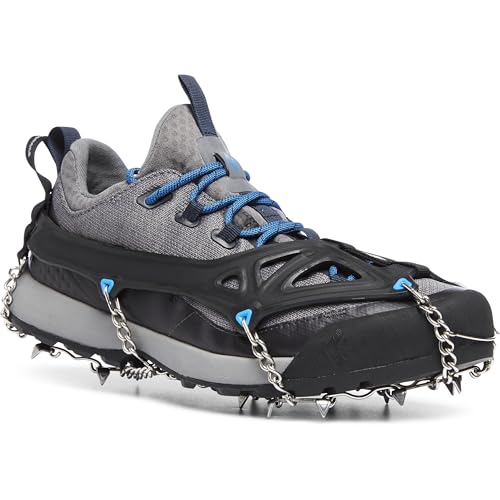
The Black Diamond Access Spike takes a minimalist approach from a brand better known for climbing hardware. Fourteen stainless steel spikes per foot sit on a low-profile chassis with a stretch harness that uses a heel tab for leverage, making the pair easy to pull on over trail runners and light boots even with cold fingers. At about 9 ounces a pair, it is one of the lighter chain-style options here, and it packs flat in a jacket pocket.
The design suits hikers who move quickly and change traction often. The spikes handle packed snow and trail ice on moderate grades, and the close fit keeps the device from shifting on soft shoes. Very steep ice is better matched to the longer-spiked Hillsound models, and the harness can be a tight squeeze over bulky winter boots, so check sizing carefully. Choose it for fast day hikes and shoulder-season summits.
Who should skip
Skip microspikes entirely if your winter walking is limited to flat, plowed sidewalks and parking lots. A simple set of studded ice cleats costs less, feels smoother on pavement, and gives you all the grip level ground requires. Microspikes on concrete wear down, feel unstable, and can damage indoor floors if you forget to remove them.
Also skip this category for technical mountaineering: steep ice, glacier travel, or routes where a fall requires self-arrest. Those conditions call for rigid crampons, an ice axe, and training. No slip-on device here is a substitute. Finally, if your hiking is mostly deep, soft snow with little ice, snowshoes or skis will serve you better than spikes that punch through powder.
Frequently Asked Questions
How do I choose the right size of microspikes?
Size by the boots you will hike in, not your everyday shoes. Insulated winter boots are much bulkier than trail runners, so many hikers need a size larger for boots. Follow the maker chart, and if you are between sizes, choose the larger size so the harness seats fully over heel and toe.
Can I wear microspikes with trail running shoes?
Yes, most models here fit trail runners, and the Hillsound Trail Crampon Ultra and Black Diamond Access Spike are designed with light footwear in mind. A strap across the top of the foot helps a lot on soft shoes. Remove the spikes on long bare pavement stretches to protect both the spikes and your shoes.
How long do microspikes last?
With normal winter trail use, a quality pair lasts several seasons. Life depends mostly on how much bare rock and pavement you cross, since hard surfaces dull spikes faster than ice does. Rinse off road salt, dry the chains and harness after each trip, store them in their sack, and check eyelets and links before the season starts.
When should I put microspikes on during a hike?
Put them on before you reach the ice, at the last patch of secure footing, rather than while standing on a slippery slope. The same applies when removing them: stop somewhere stable. Carry the pair in an outside pocket all day, because shaded descents often stay icy long after sunny climbs have cleared.
Final verdict
For a single pair for most winter trails, the Kahtoola MICROspikes remain the benchmark, with proven chains, well-placed stainless spikes, and a harness that fits real winter boots. Hikers on steep ground should step up to the Hillsound Trail Crampon for its longer spikes, or the Trail Crampon Ultra for light footwear. If your routes mix pavement, rock, and ice, the Kahtoola EXOspikes are the most comfortable all-surface option, while the Black Diamond Access Spike is the light, packable choice for fast day hikes.
FAQ
How do I choose the right size of microspikes?
Can I wear microspikes with trail running shoes?
How long do microspikes last?
When should I put microspikes on during a hike?
More from Amazon
Programs that pair well with the guide above. Offers and eligibility are set by Amazon and may change.
Free shipping on eligible items, Prime Video and more. Eligible new members can start with a free trial.
Start a Prime free trialAudiobooks and podcasts to listen to on the go. Eligible new members can start with a free trial.
Try Audible freeAd-free music streaming. Eligible new subscribers can start with a free trial.
Try Music Unlimited freeA free business account with business pricing and bulk-buying tools for work, shop or home office.
Create a business accountAs an Amazon Associate we earn from qualifying purchases.


Write Your Review
No reviews yet. Be the first to share your experience!